
General Dashboard
Data related to poverty
Based on the 2025 Canadian Income Survey Data, released in 2026. Using the 2023 MBM base year.
Overall Poverty Statistics
Current Poverty Rate
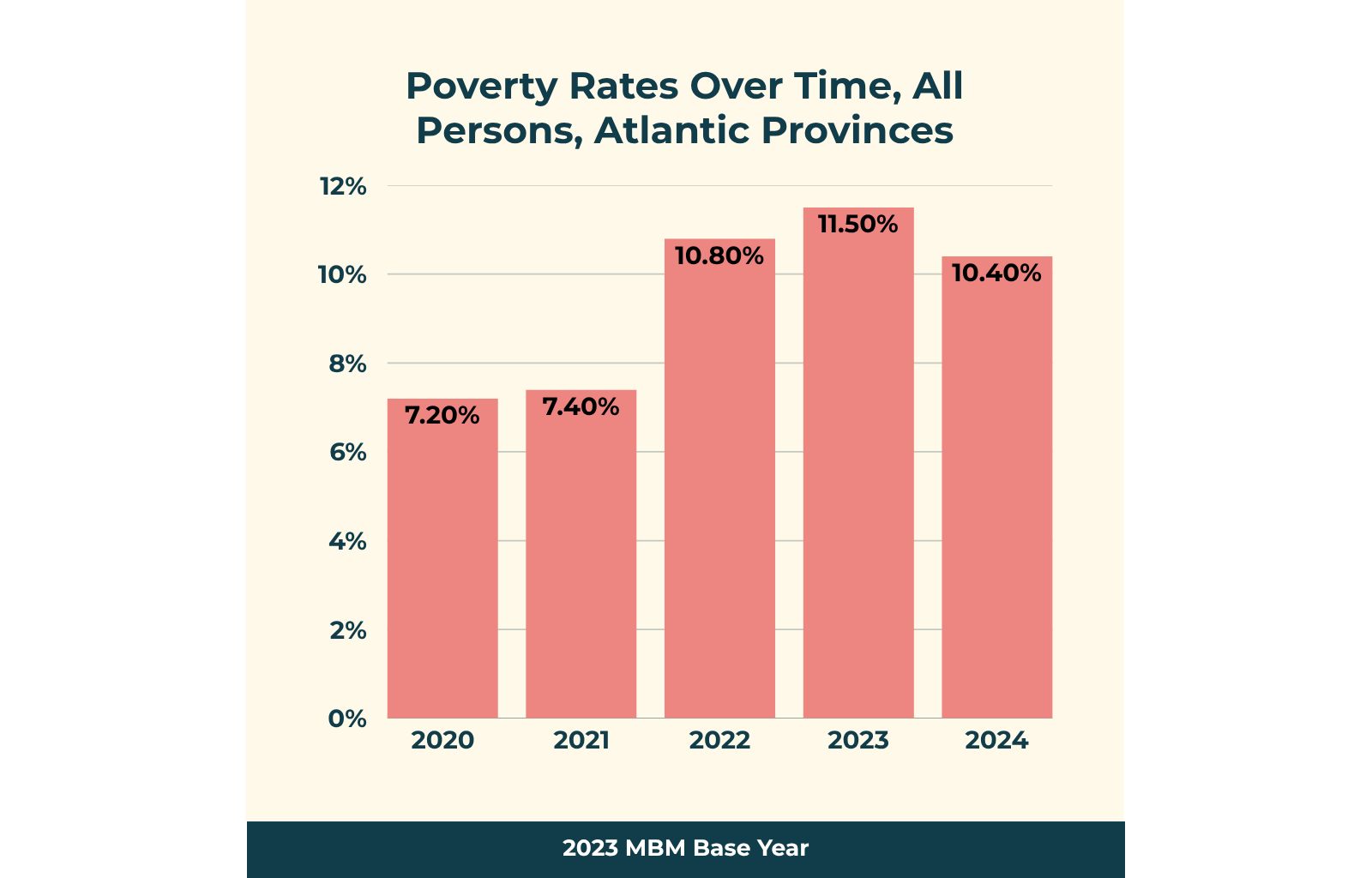
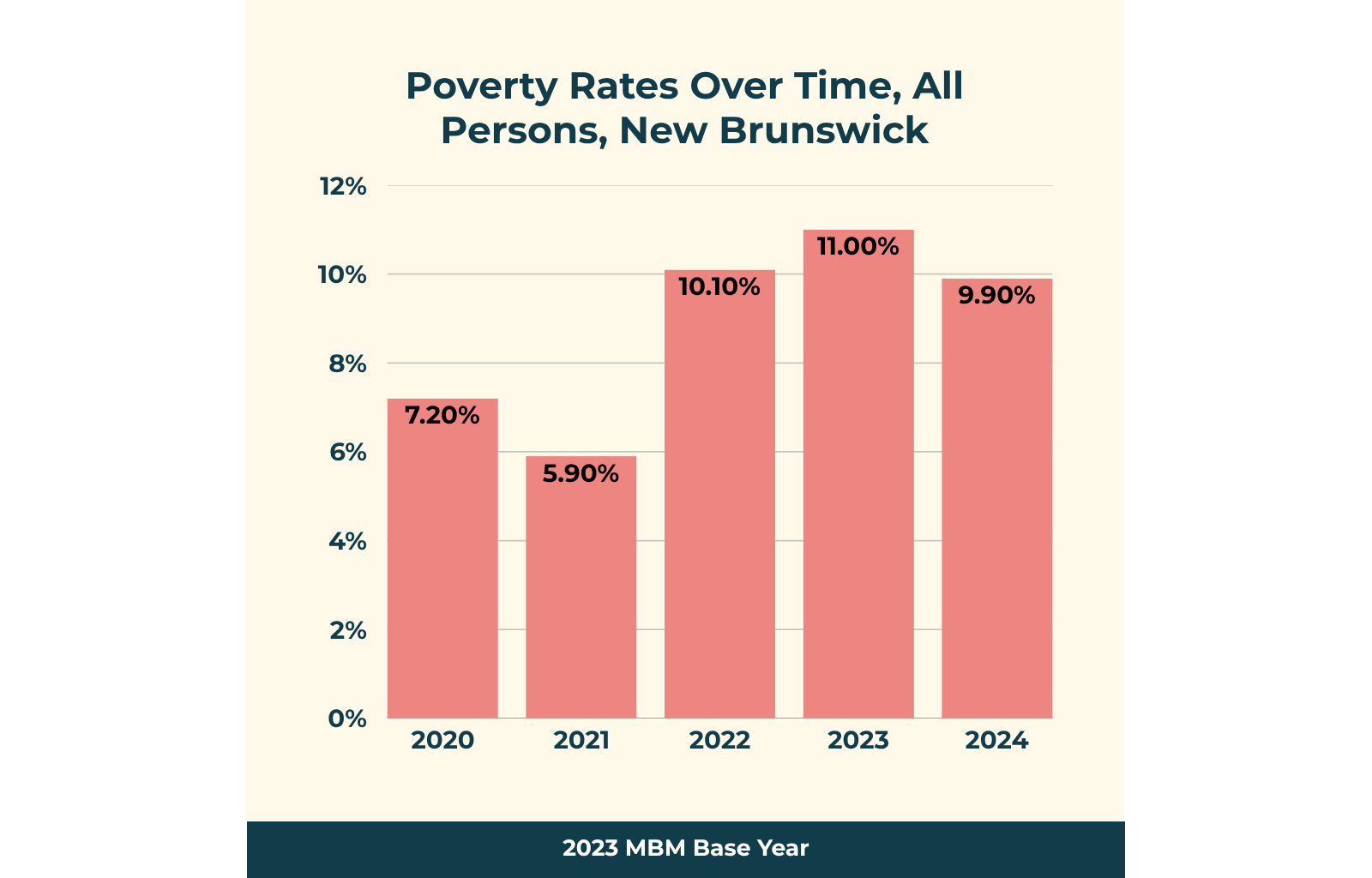
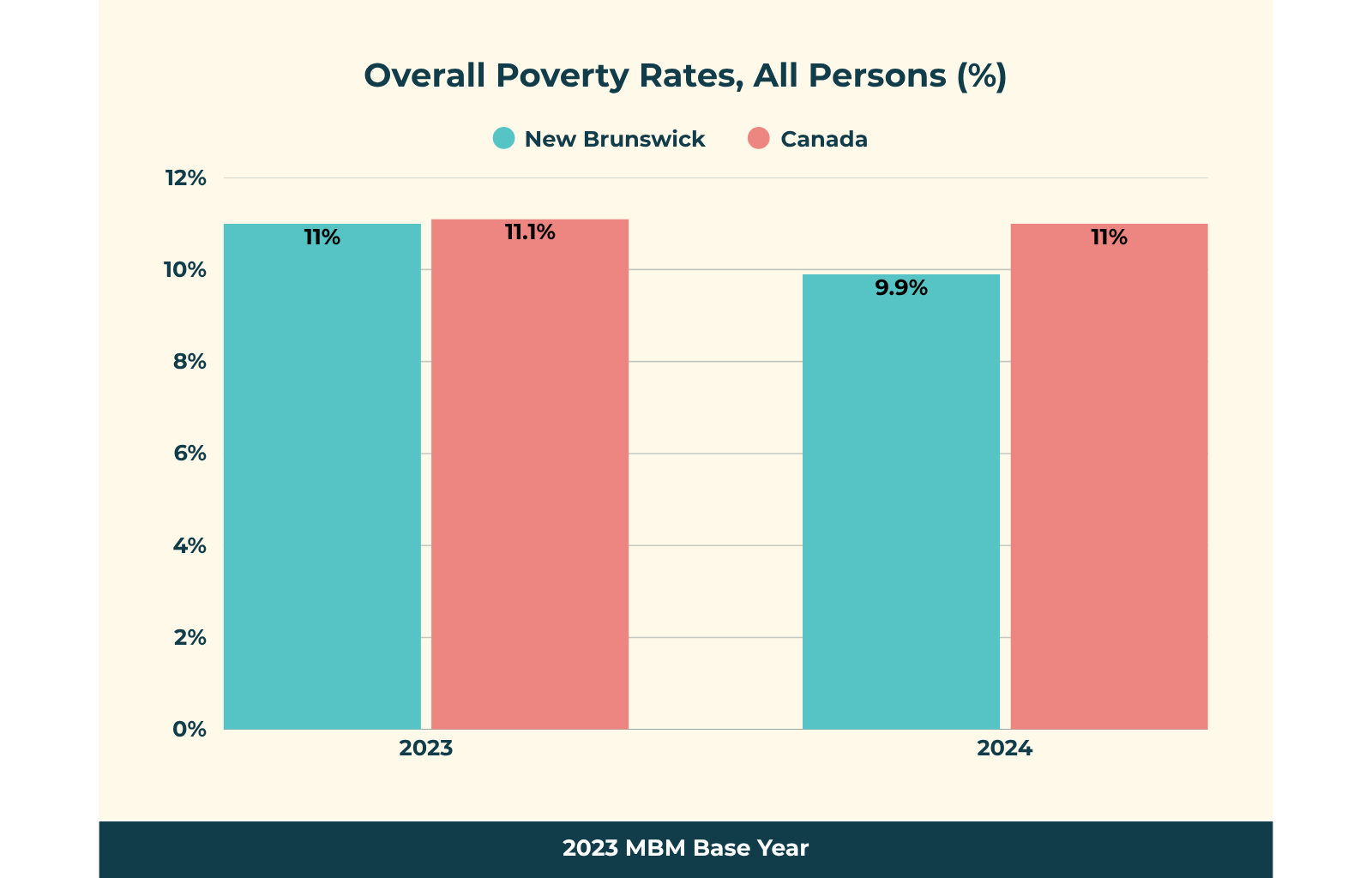
9.9%
People Living Below the Poverty Line
~96,800
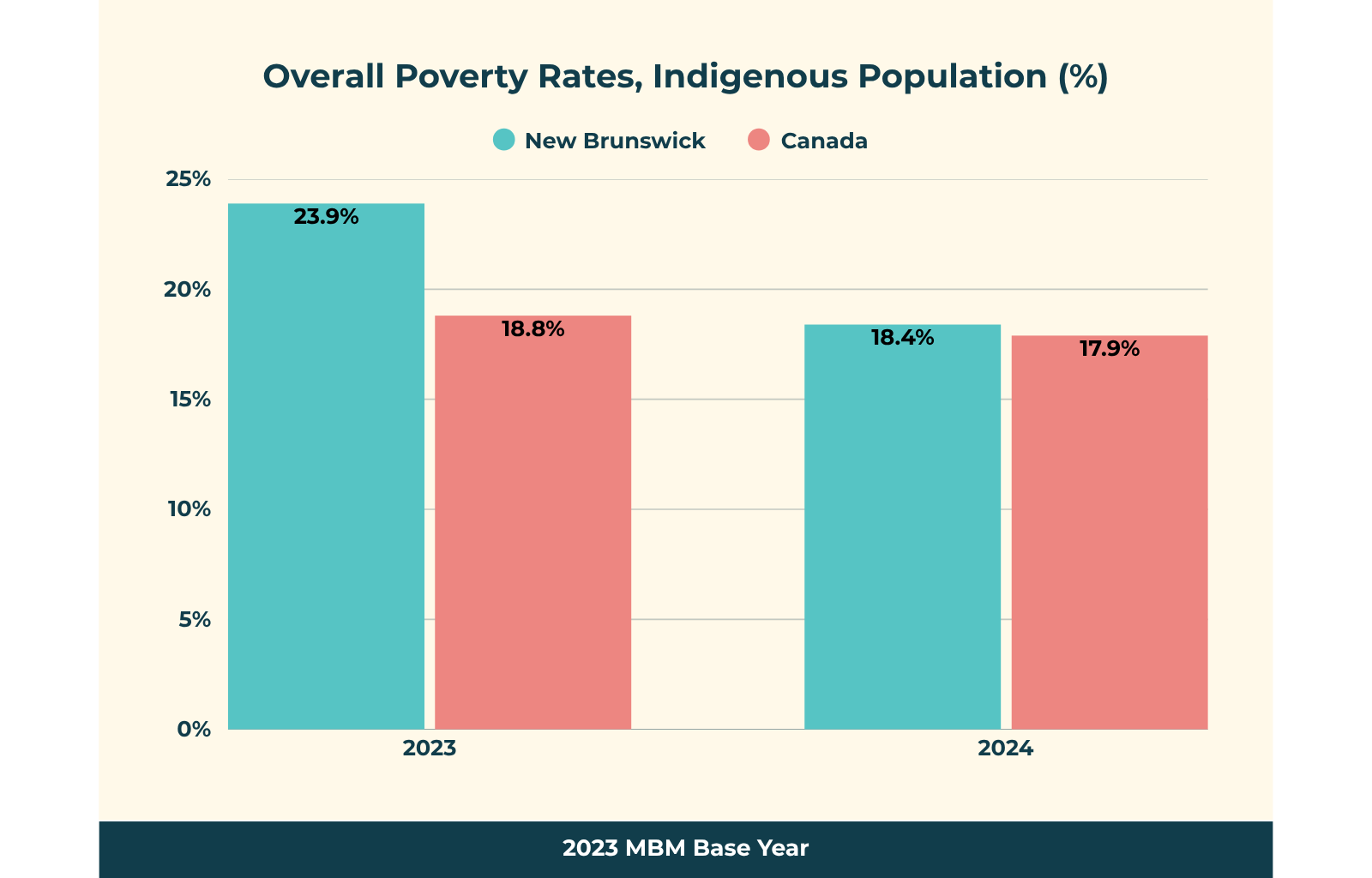
Indigenous population numbers may not fully be accurate because they rely on people choosing to identify as Indigenous in surveys and census data. Some people may not participate or may chose not to identify, which can lead to undercounting.
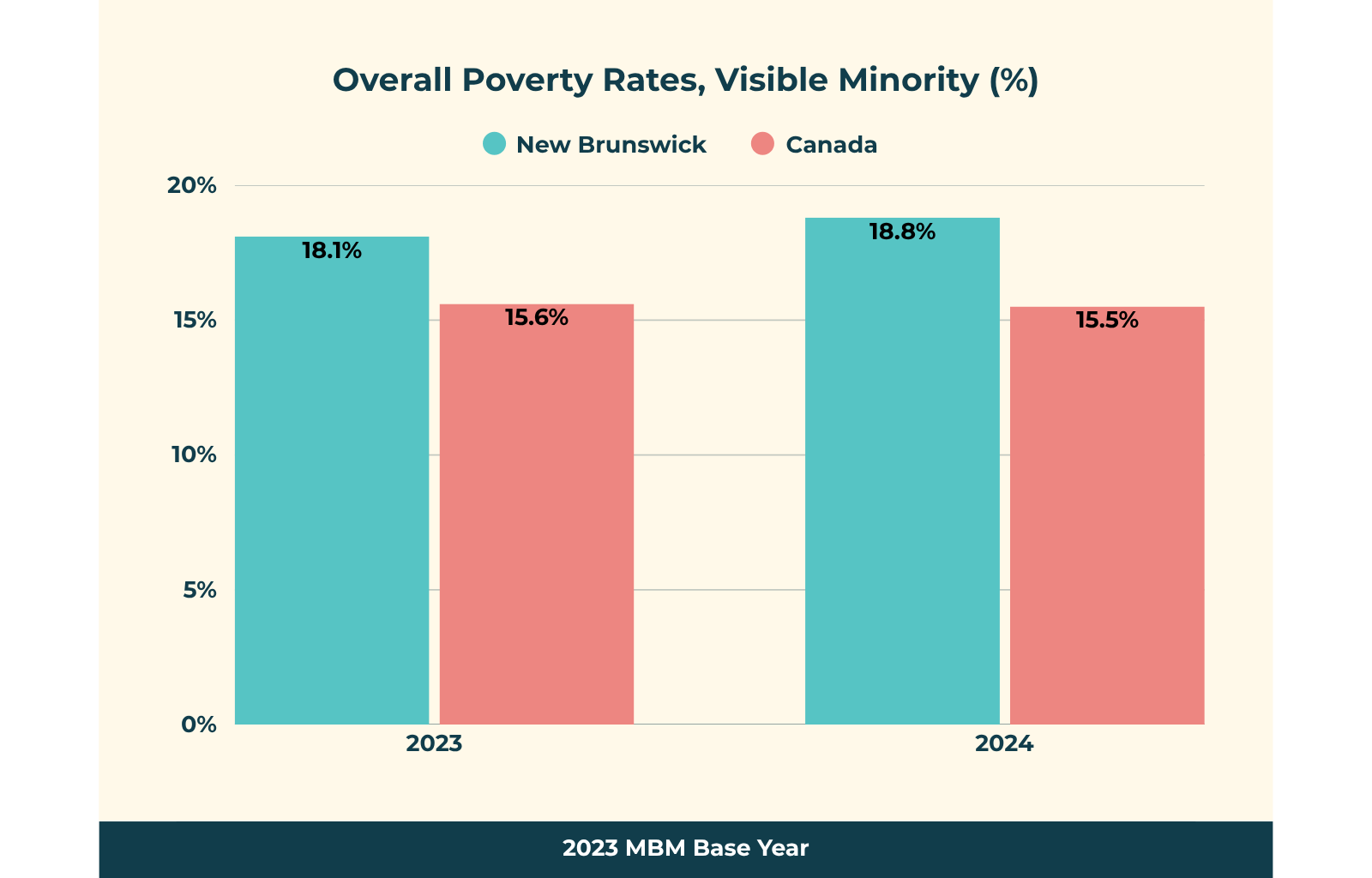
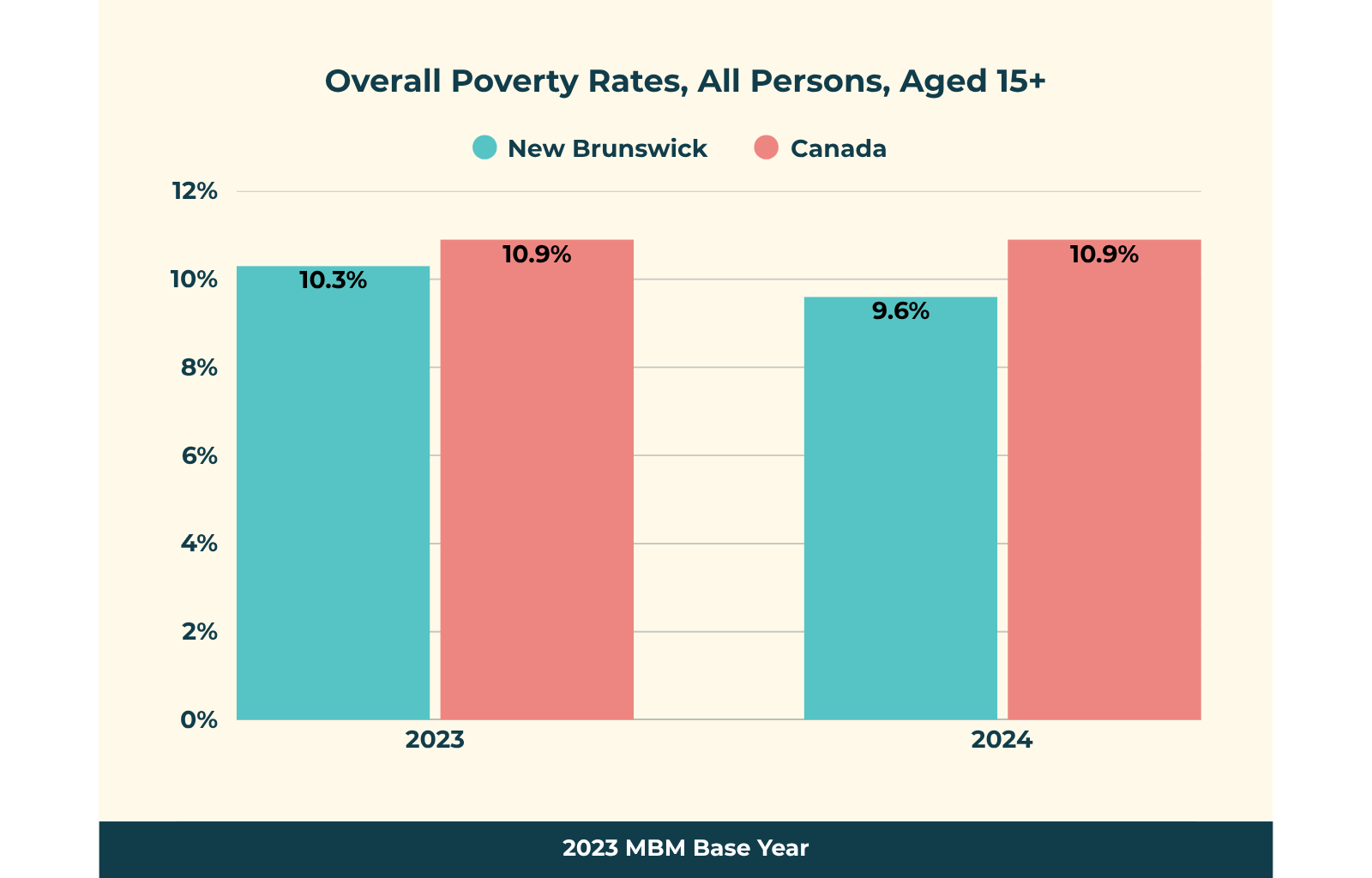
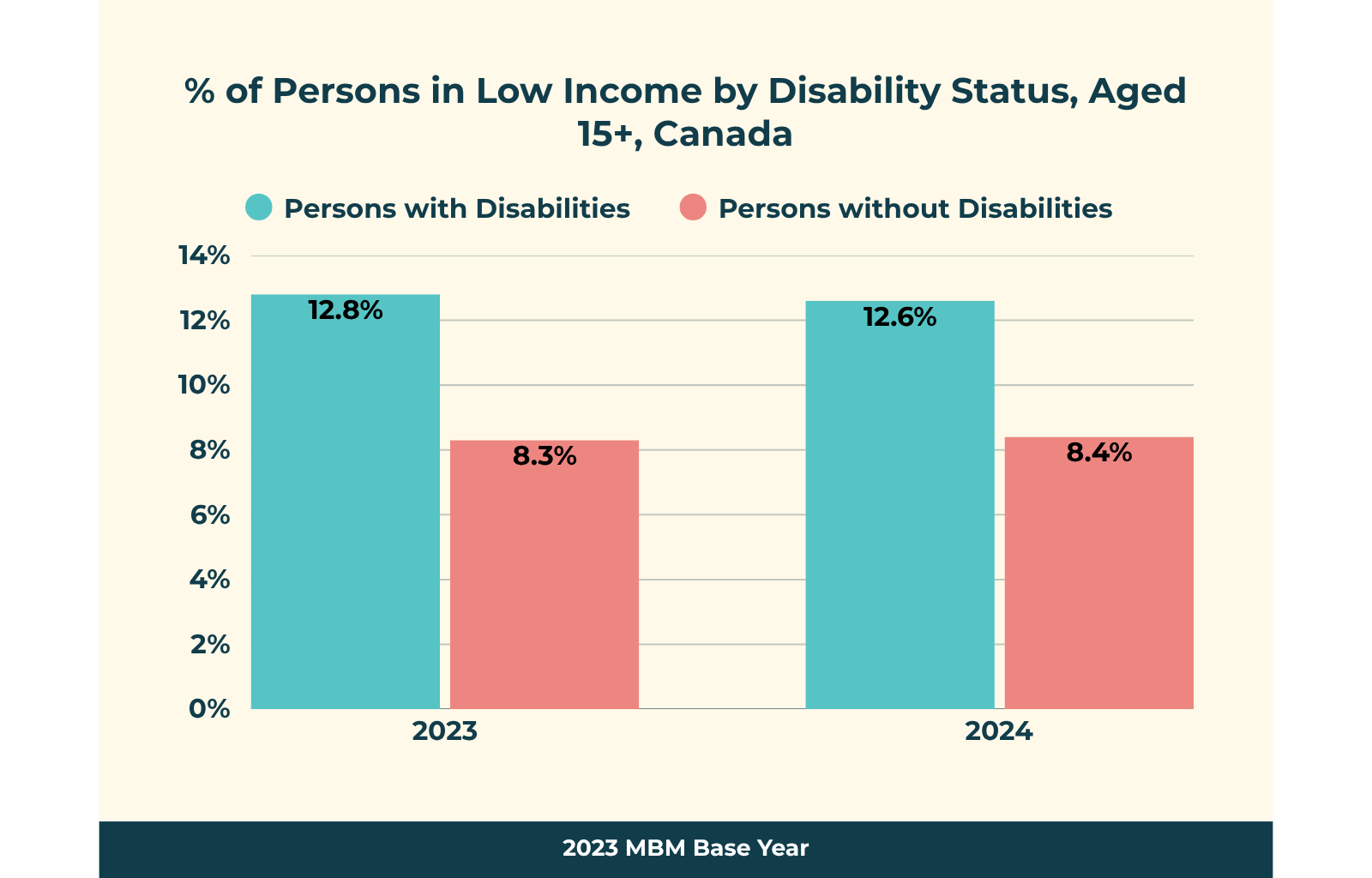
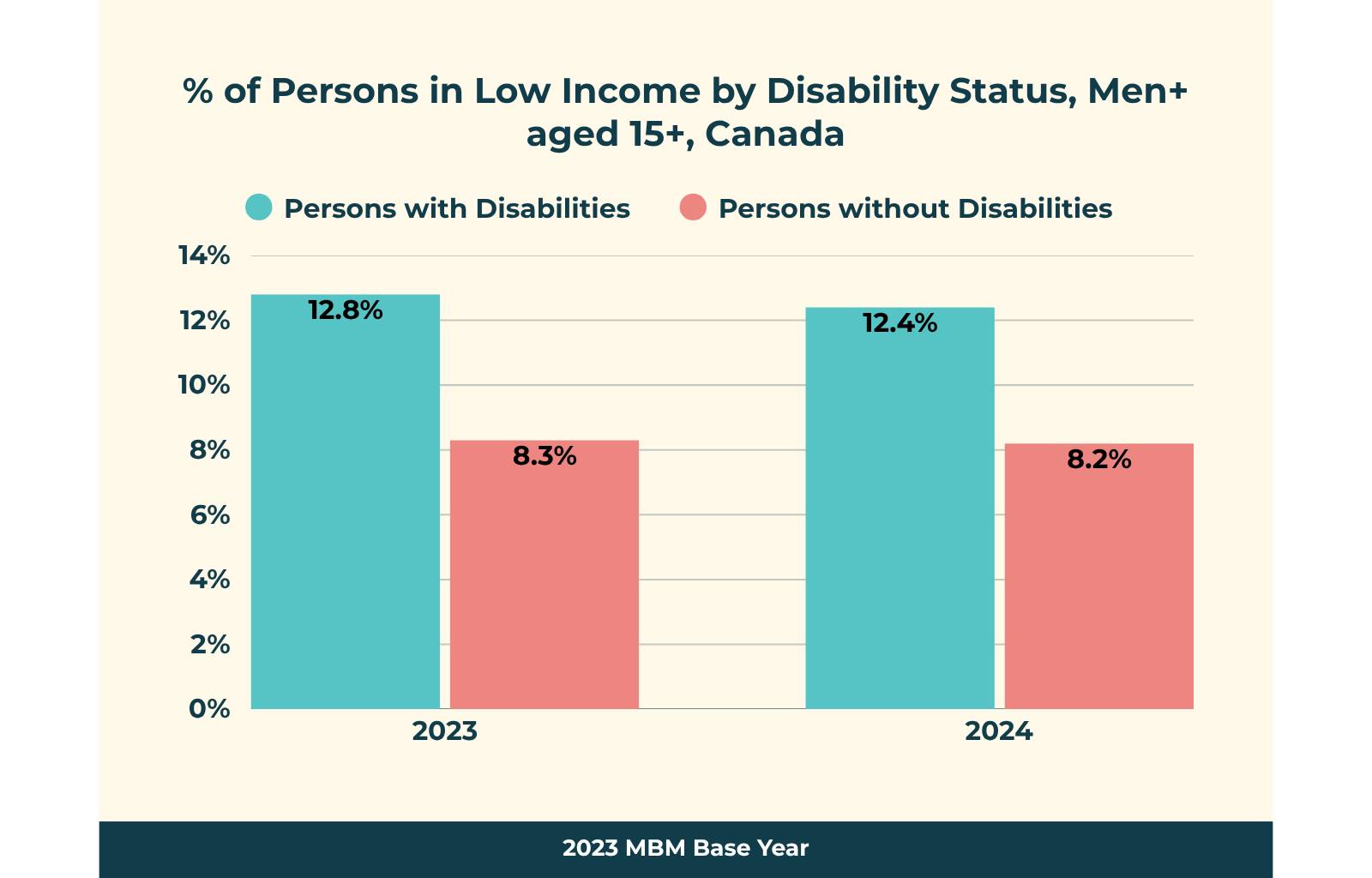
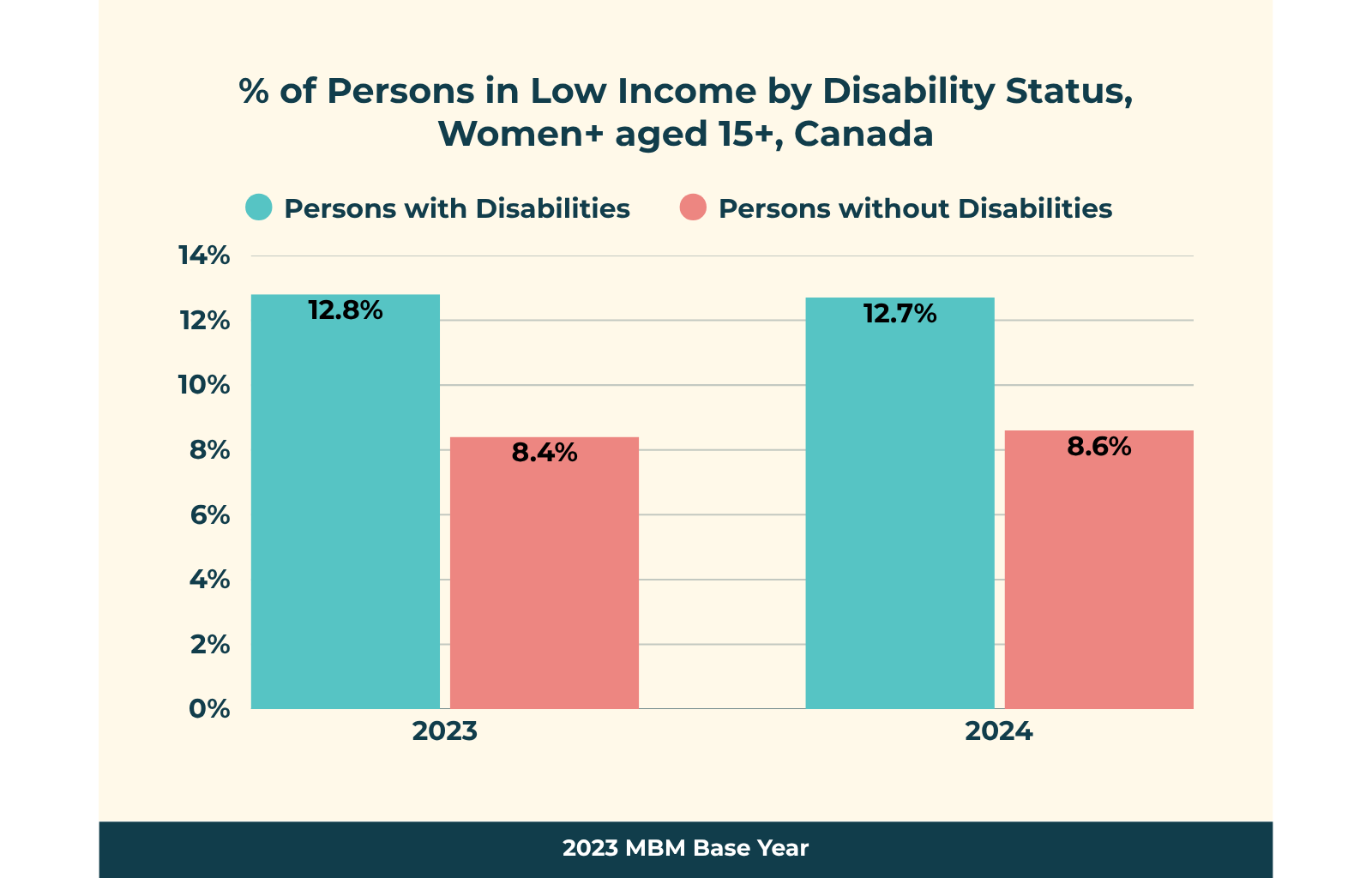
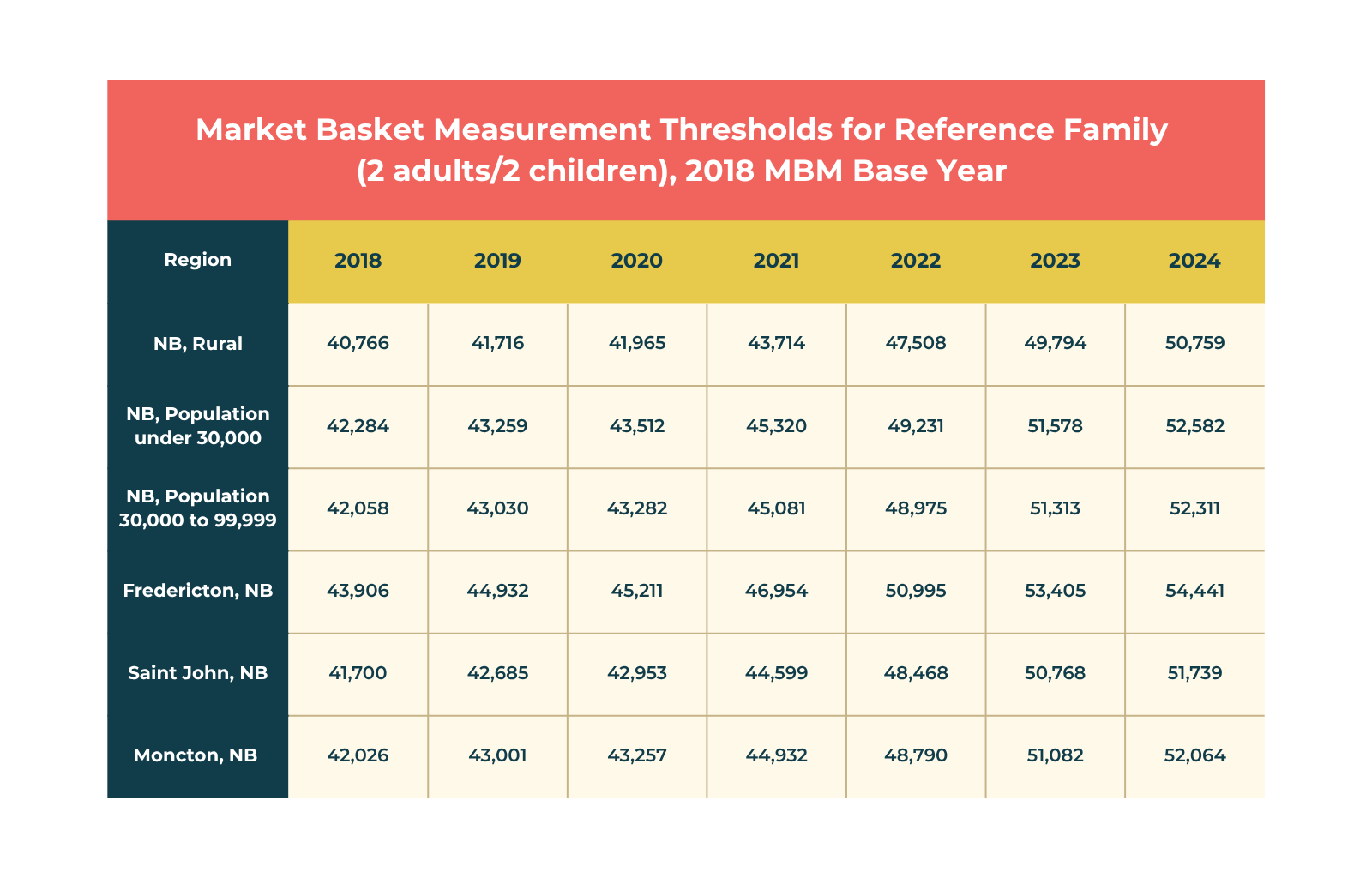
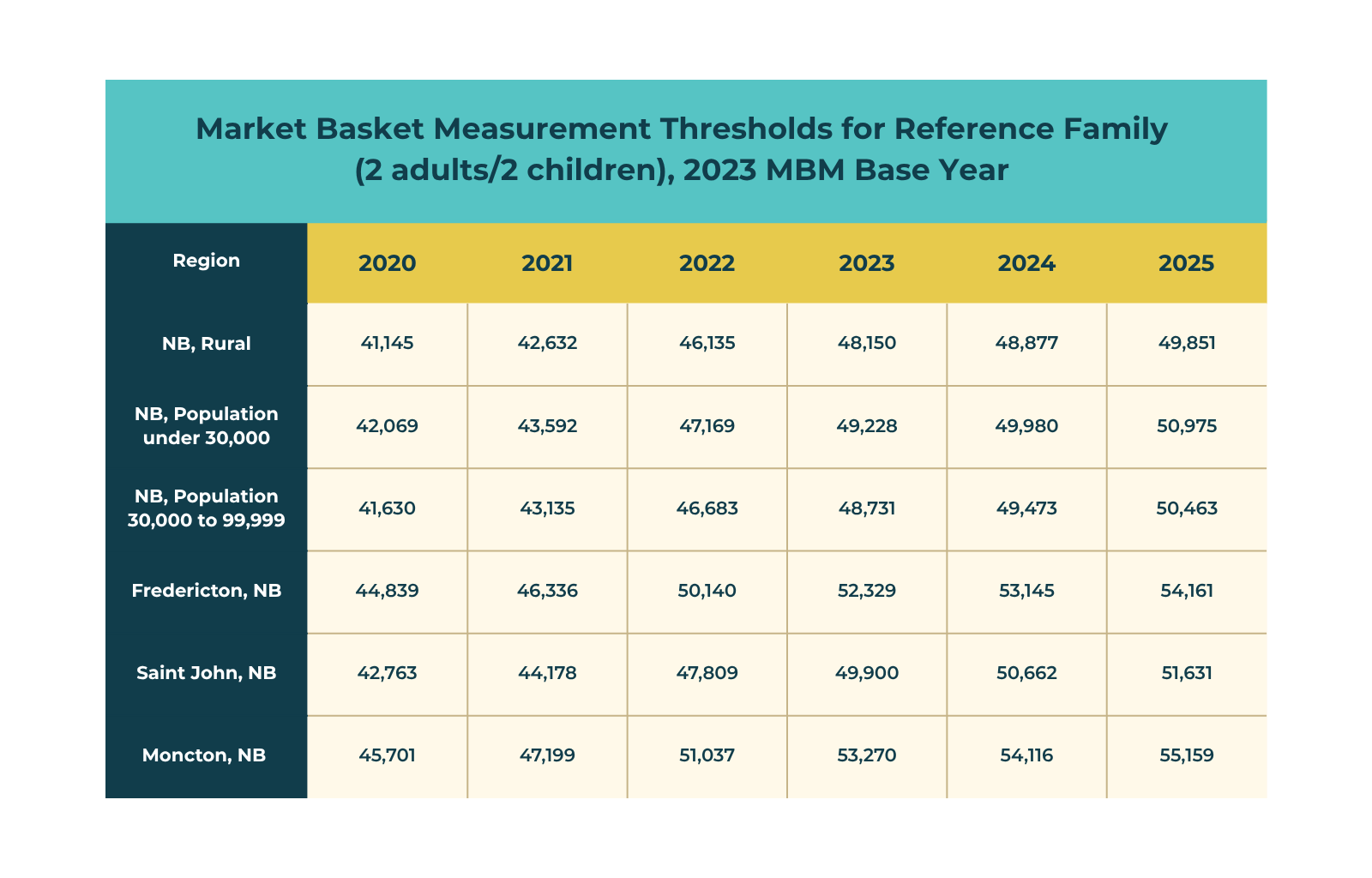
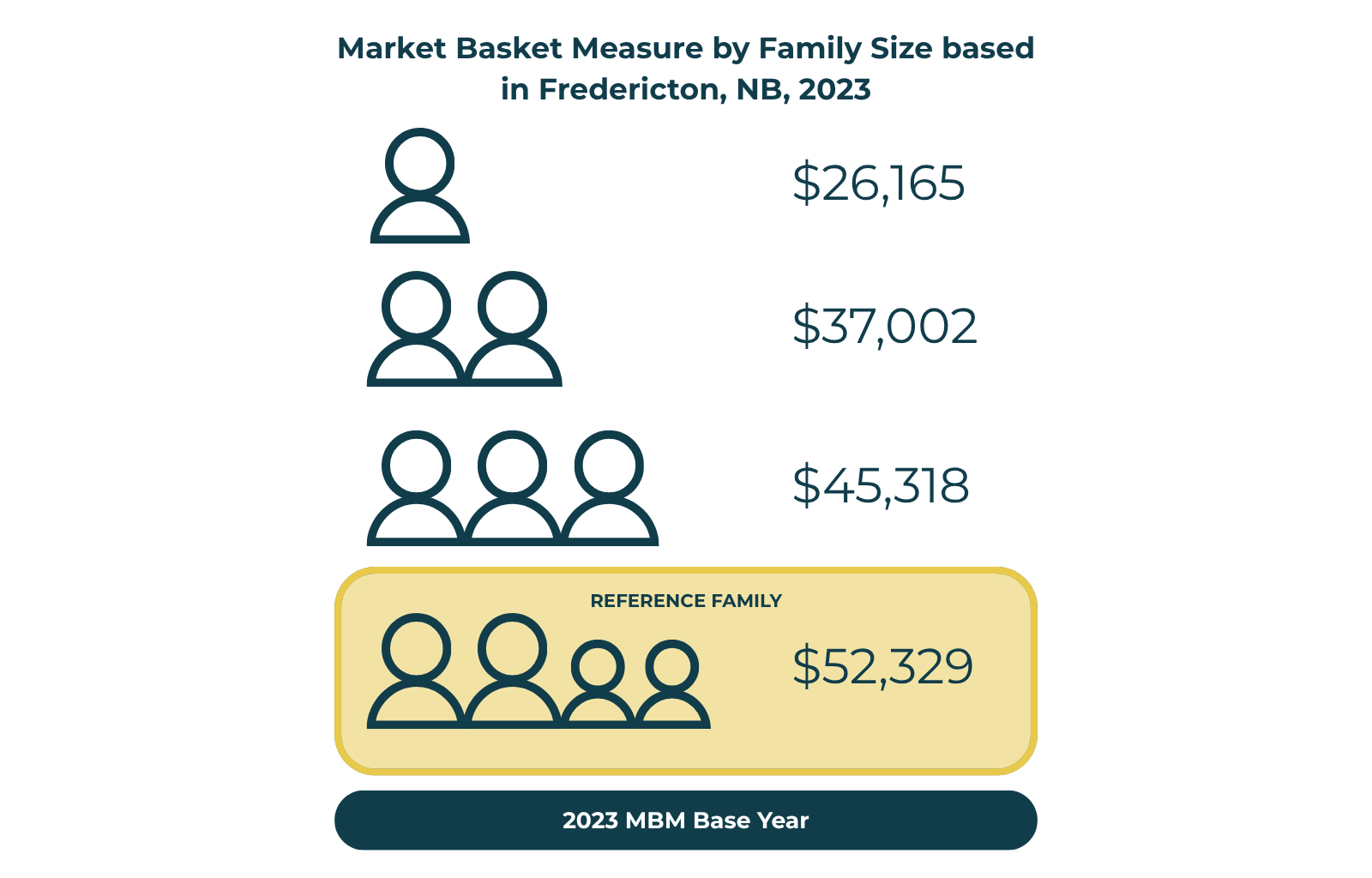
The Reference Family consists of one male and one female adult aged 25-49, along with two children: a female child aged 9 and a male child aged 13. This family was chosen because it represents a modest, basic standard of living and is the most common family size in Canada.
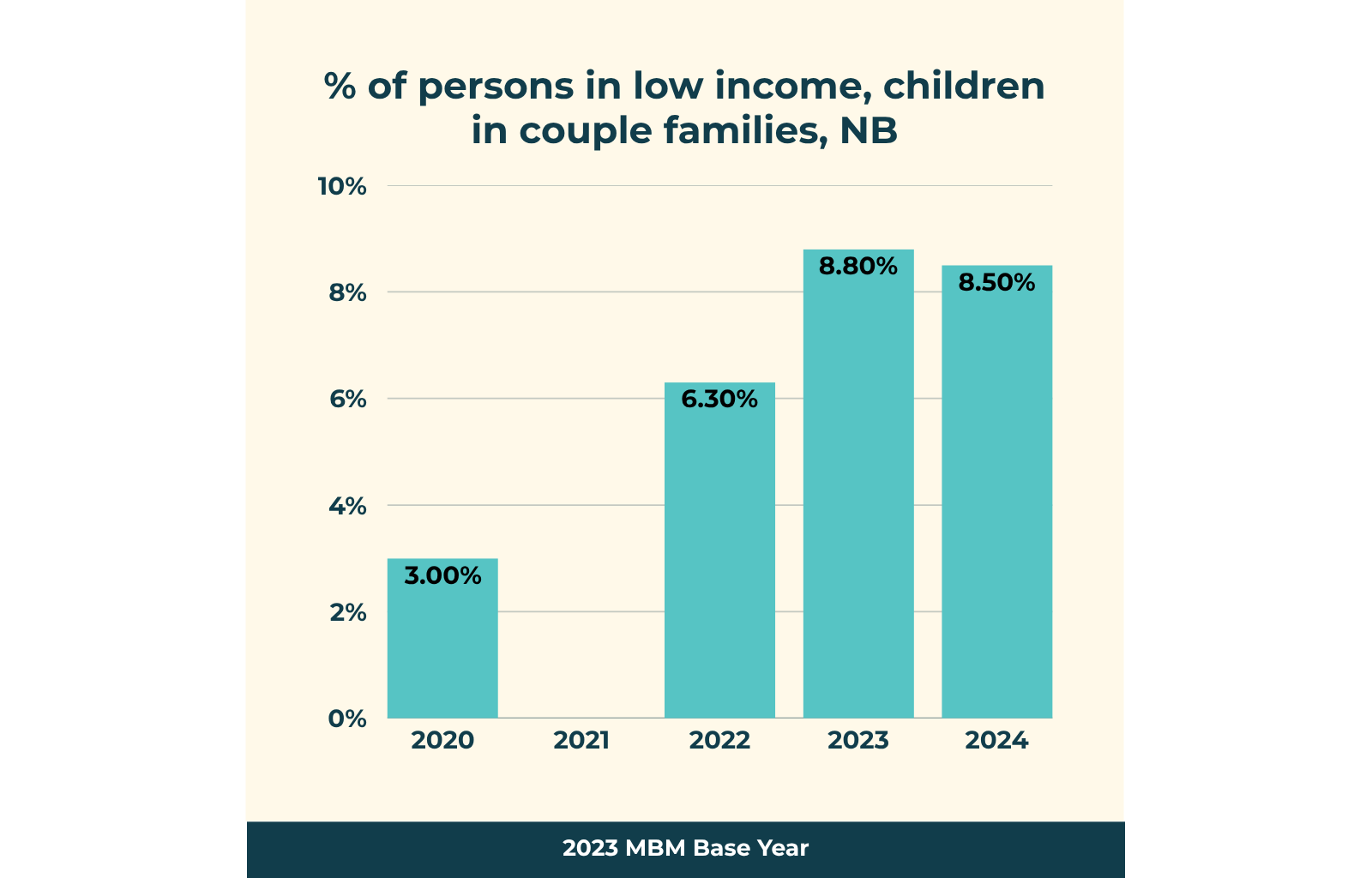
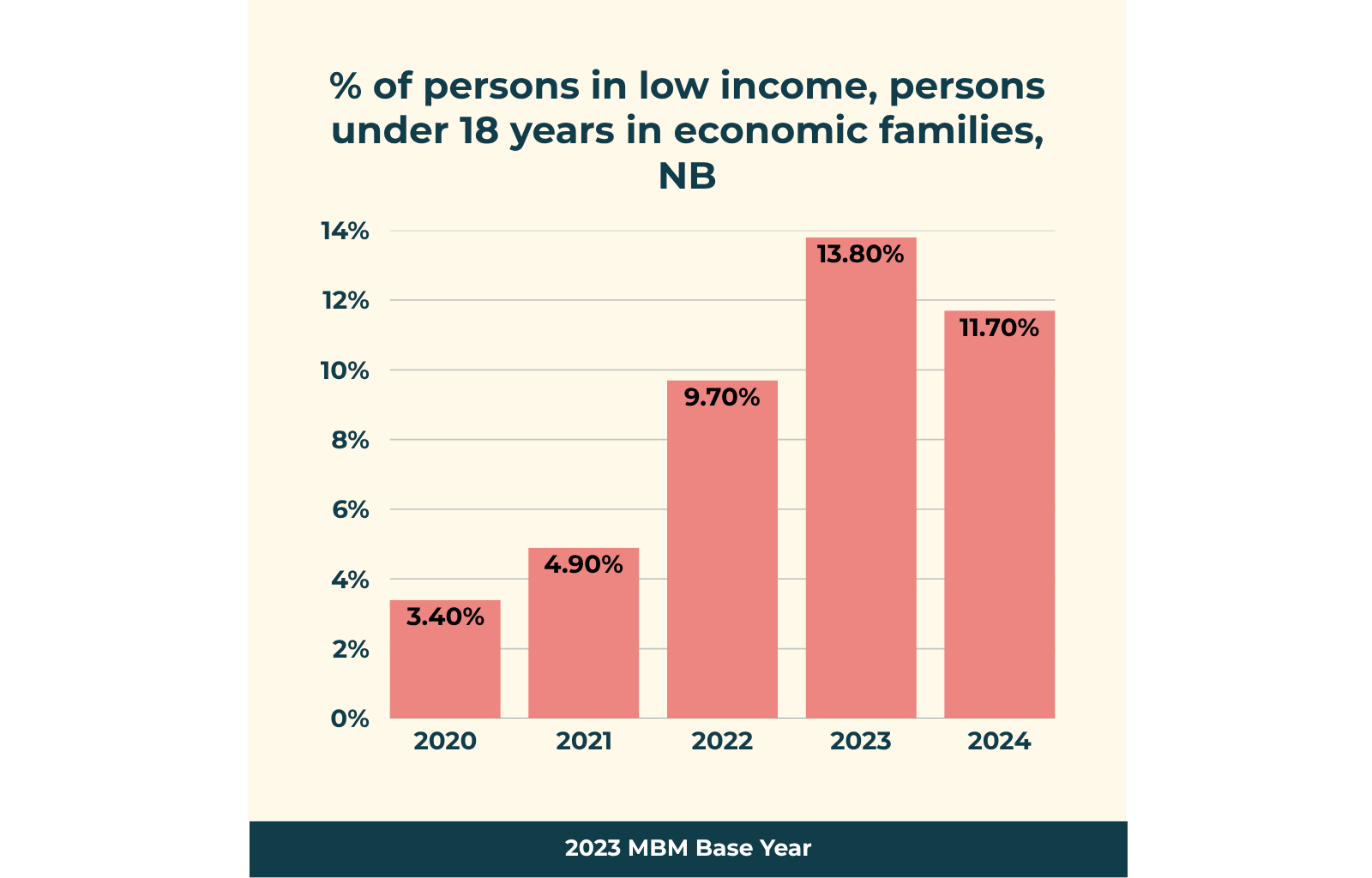
Child Poverty
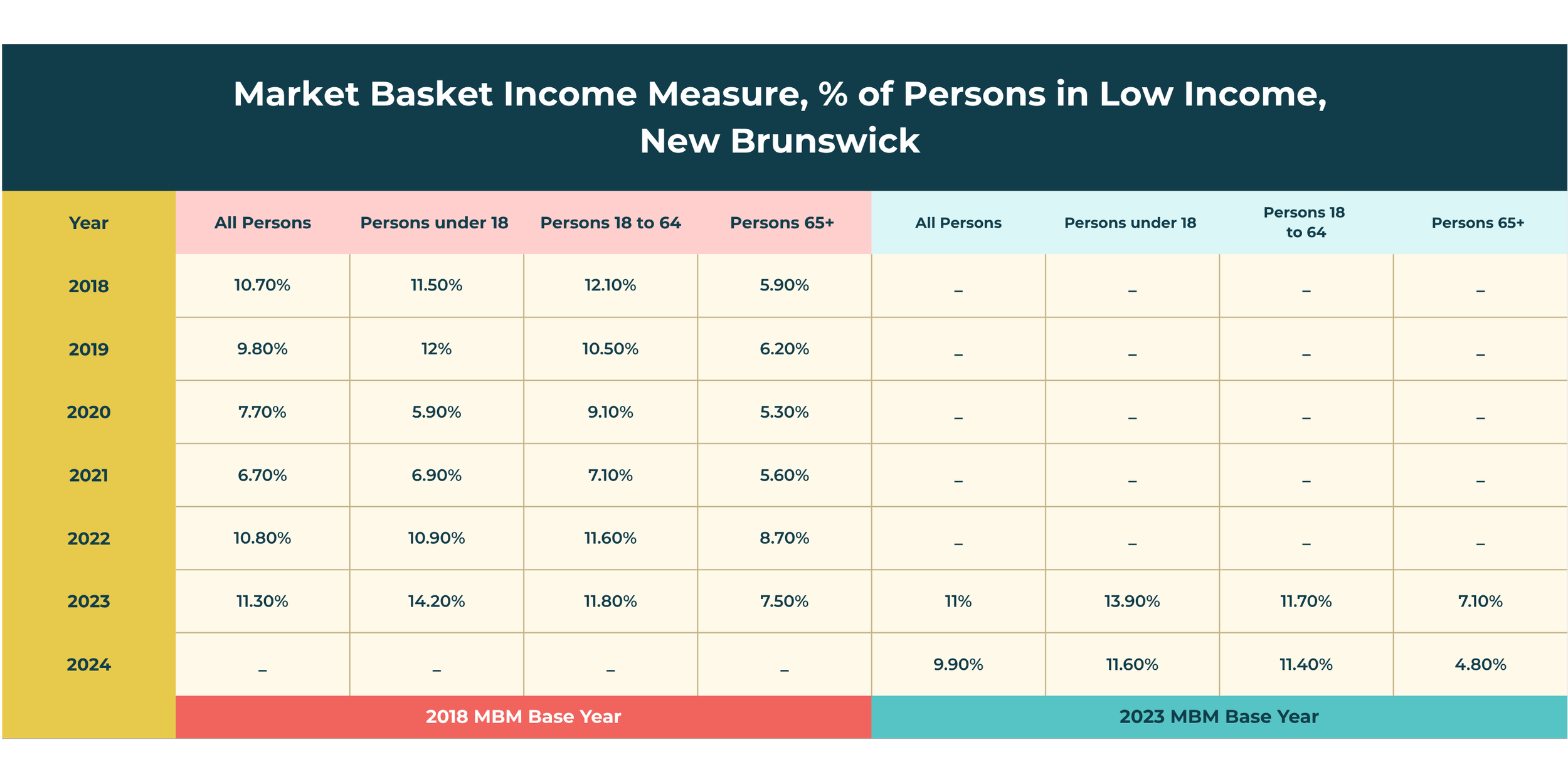
Approximately, 1.4 million Canadian children lived in poverty in 2025. That's roughly 1 in 5 Canadian children.
Families and households can protect children from poverty by sharing money, housing, childcare, food, and other support during difficult times. This protection does not have to come from a traditional nuclear family. Grandparents, relatives, close family friends, and other shared living or caregiving arrangements can also help reduce hardship and provide stability for children. Researchers describe these kinds of networks as informal safety nets because they help families absorb financial stress and meet children's needs collectively.
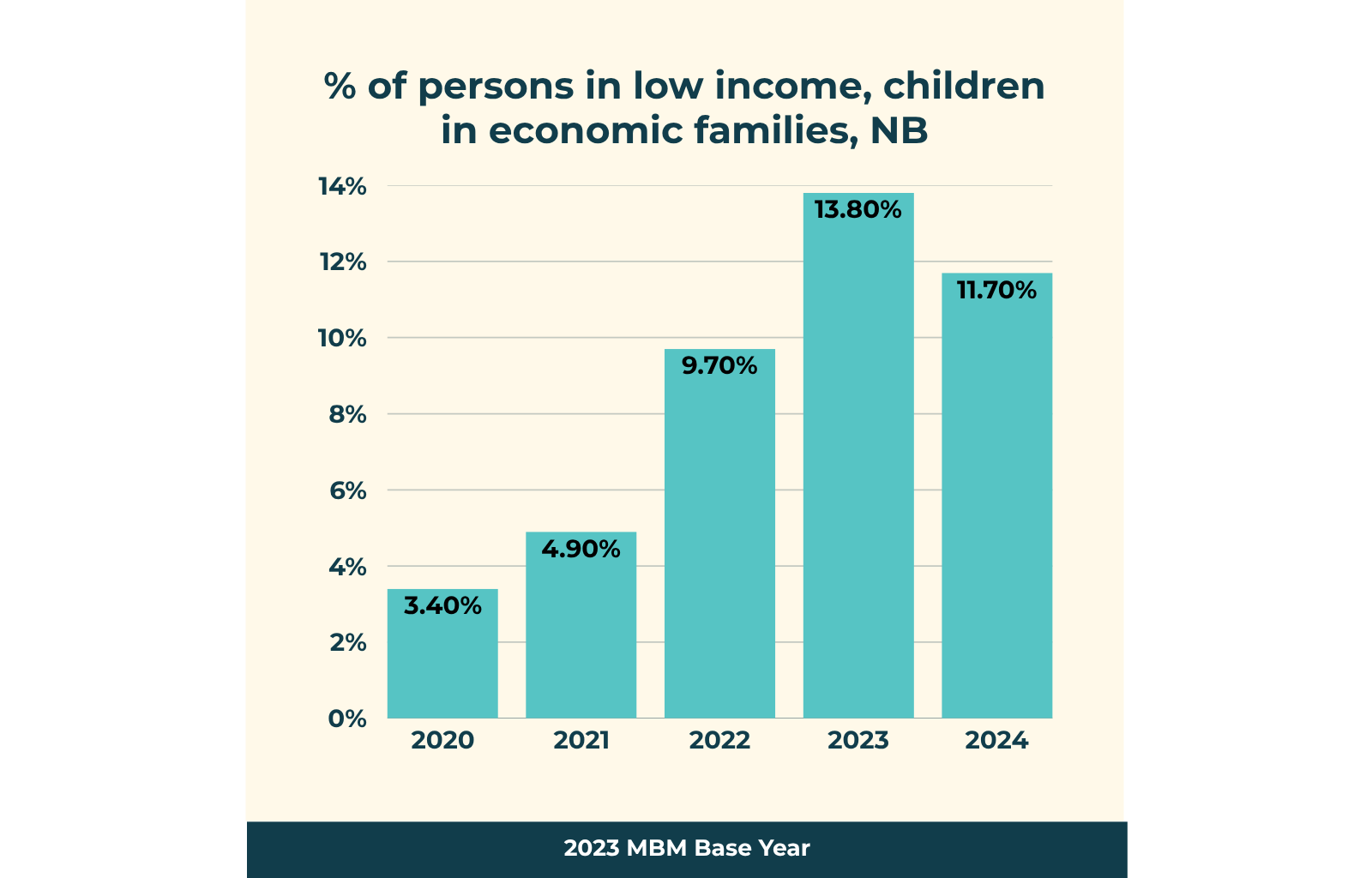
The (2018) MBM child poverty rate increased sharply in New Brunswick, rising from 11.3% to 14.9%. New Brunswick has the country’s sixth-highest child poverty rate (fourth if only including the provinces not the territories).
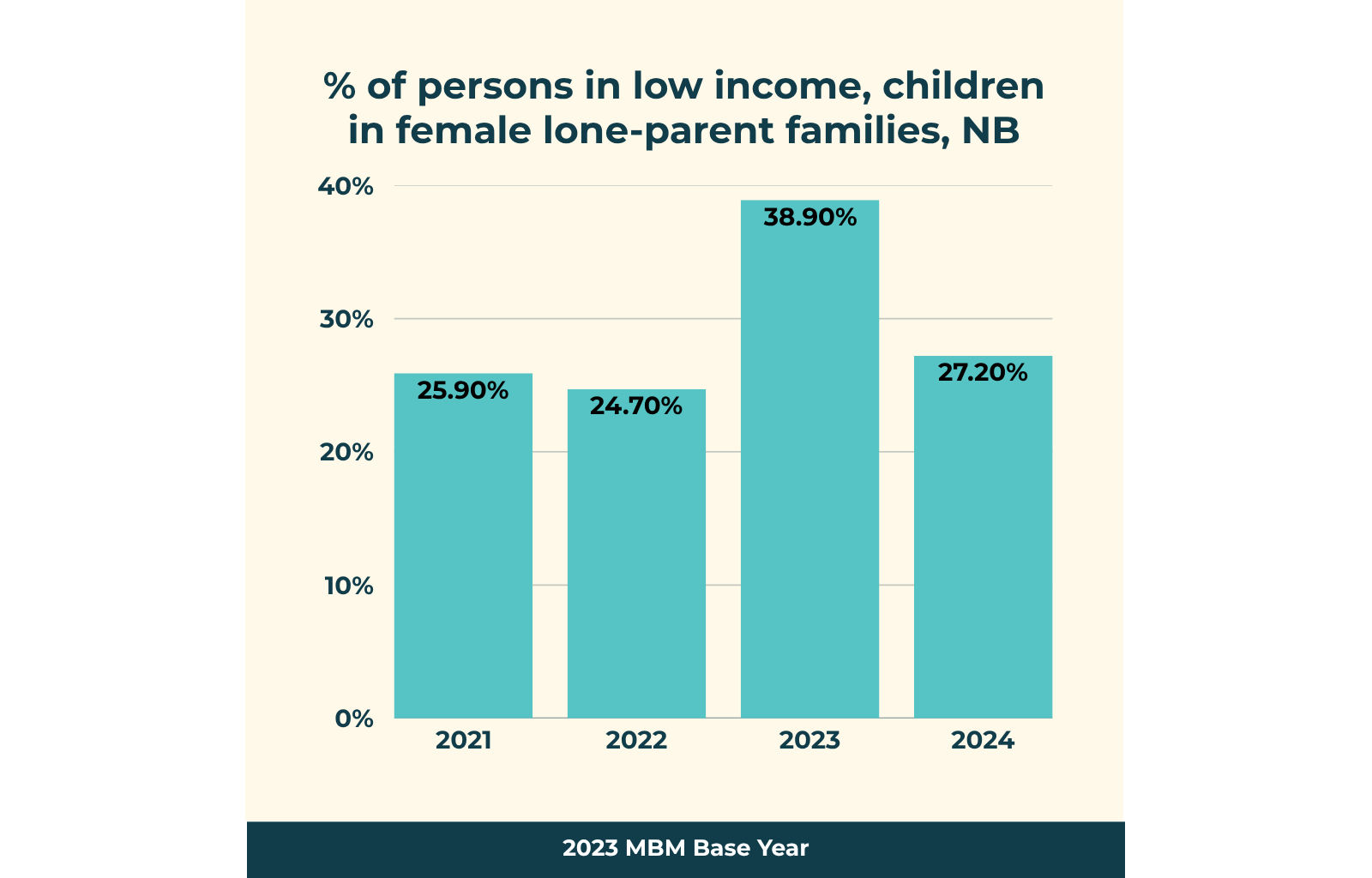
The child poverty rate in NB for children in lone female-led families is 27.7%. It is crucial to recognize the varying and intersecting levels of poverty that different types of families experience across our province.
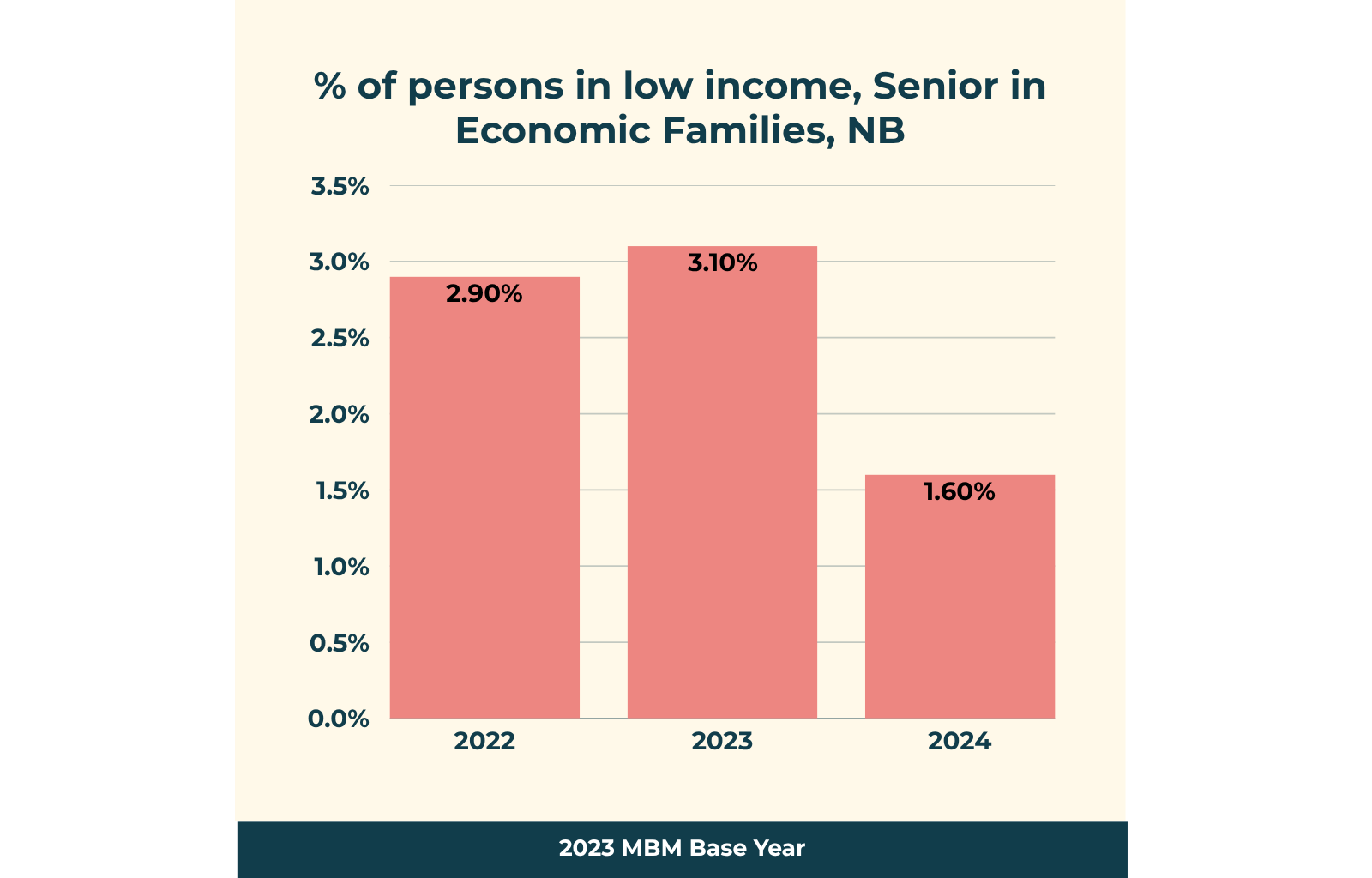
Senior Poverty
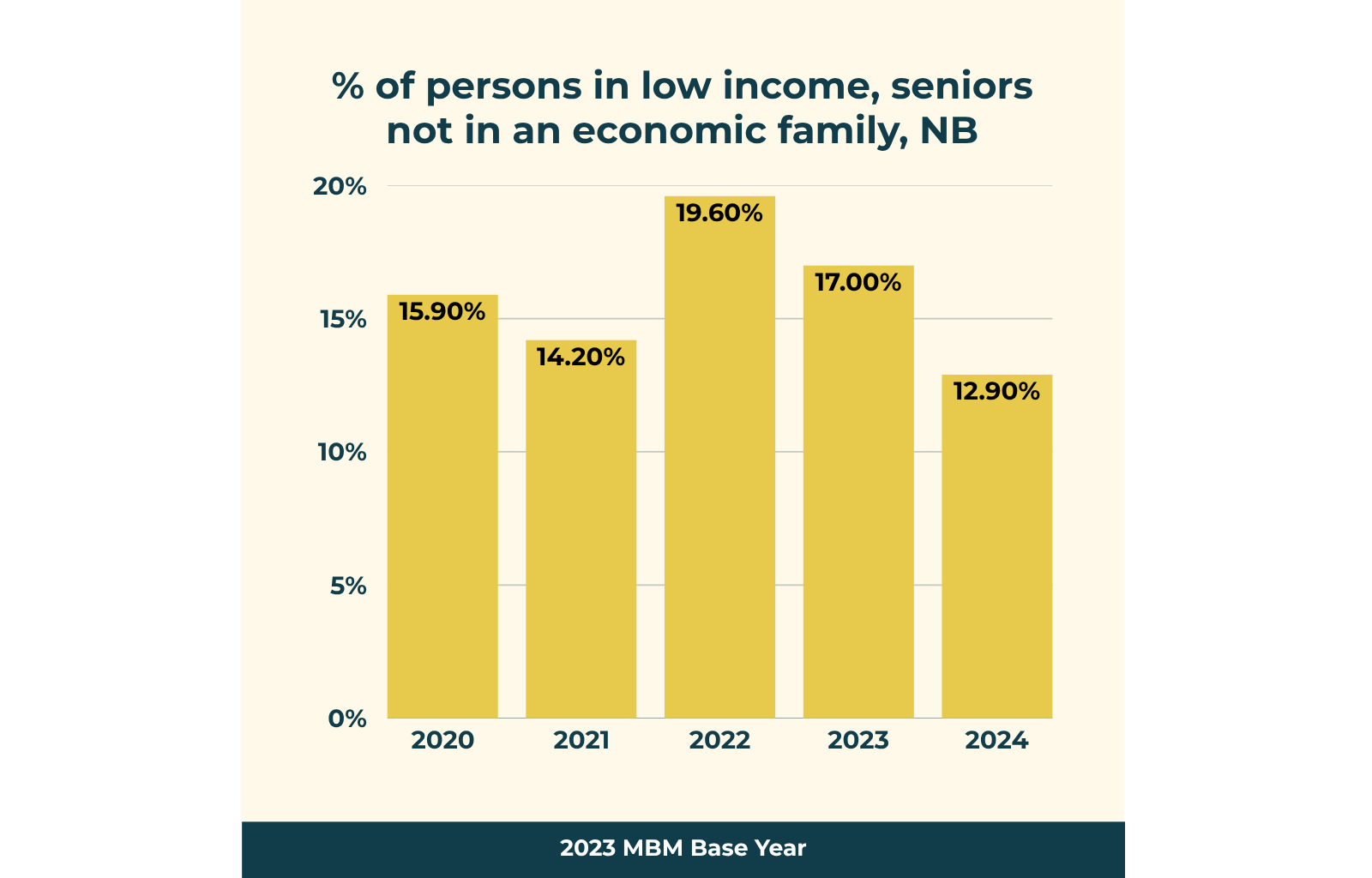
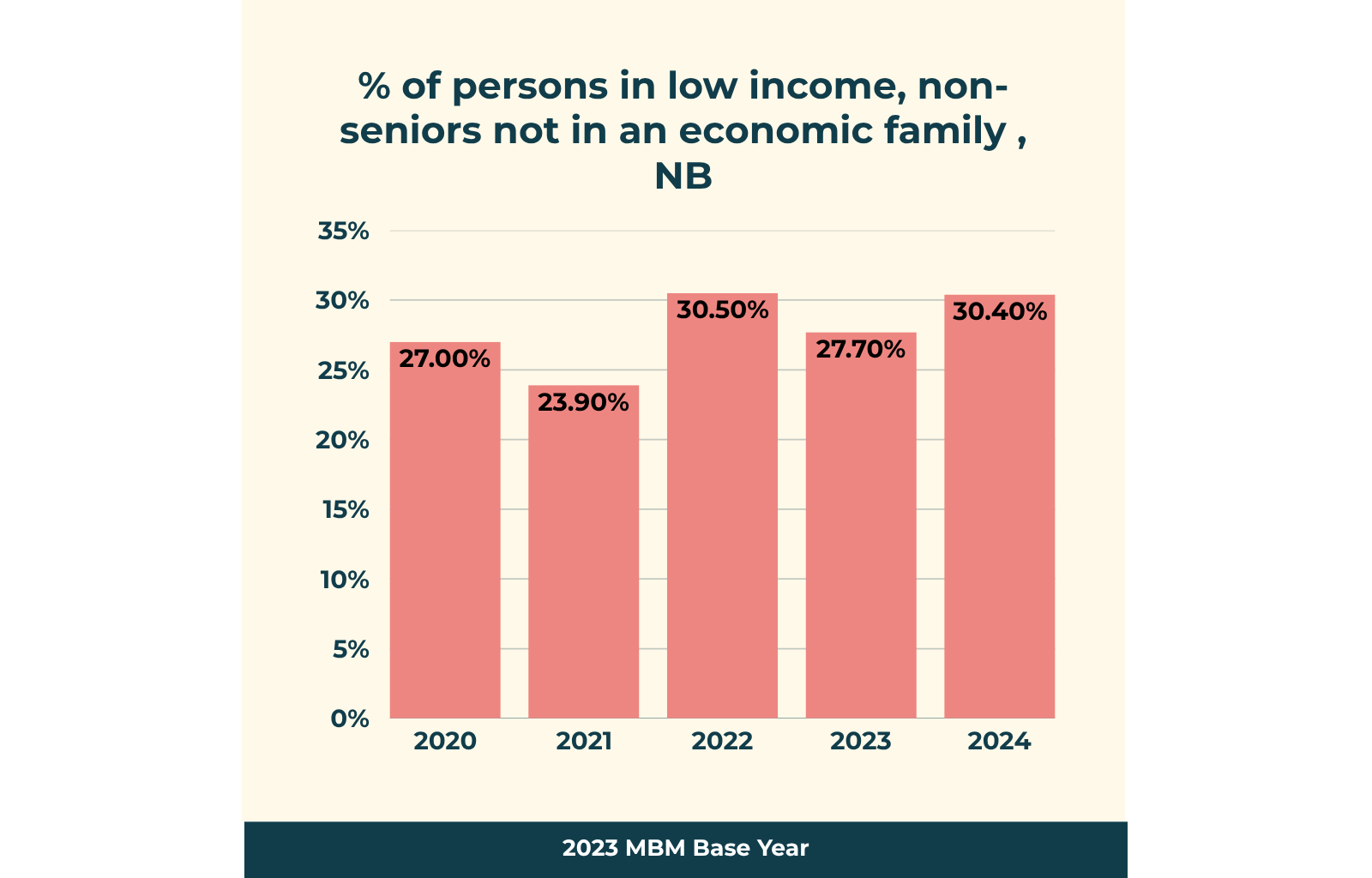
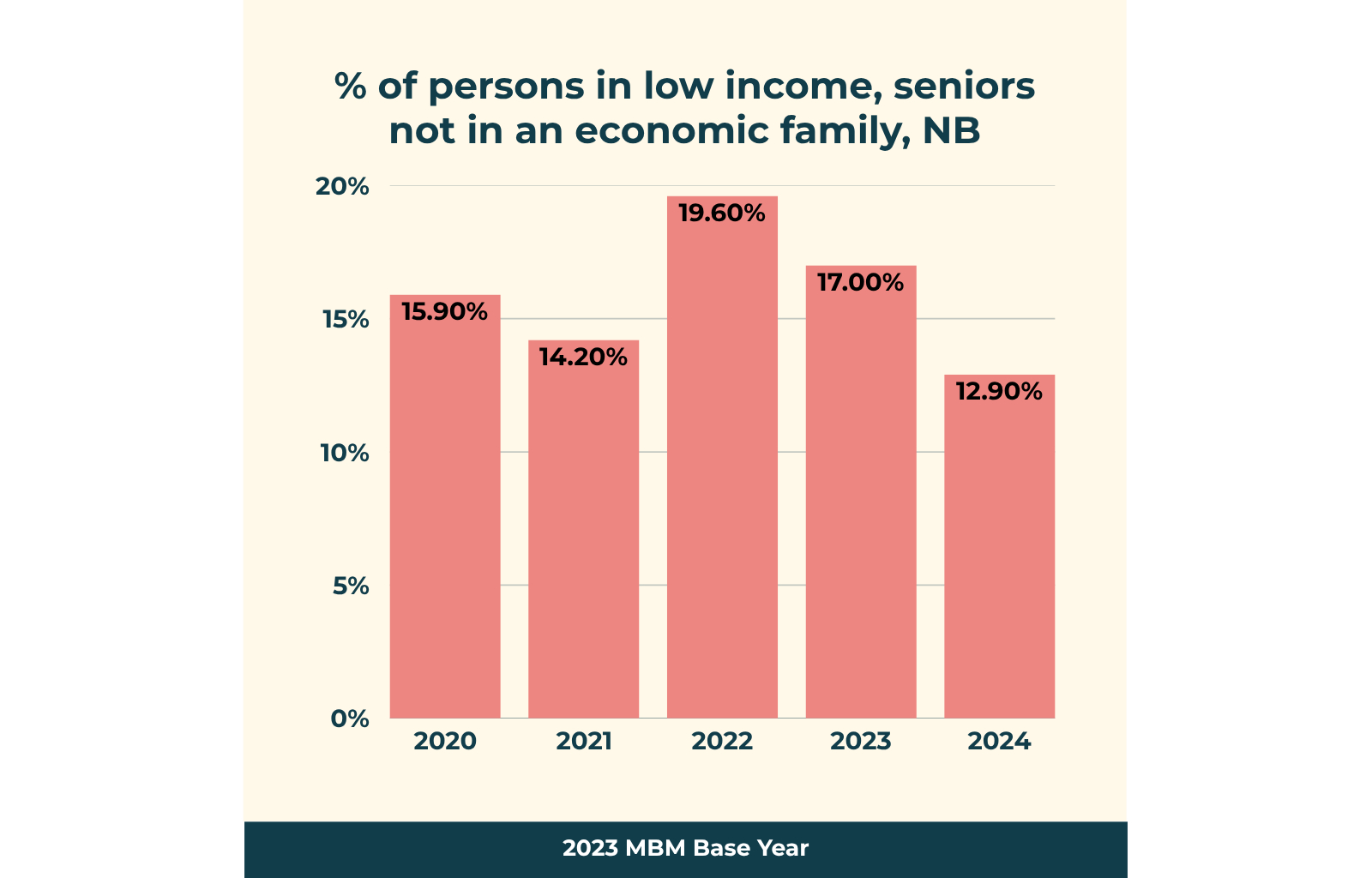
Seniors not in an Economic Family
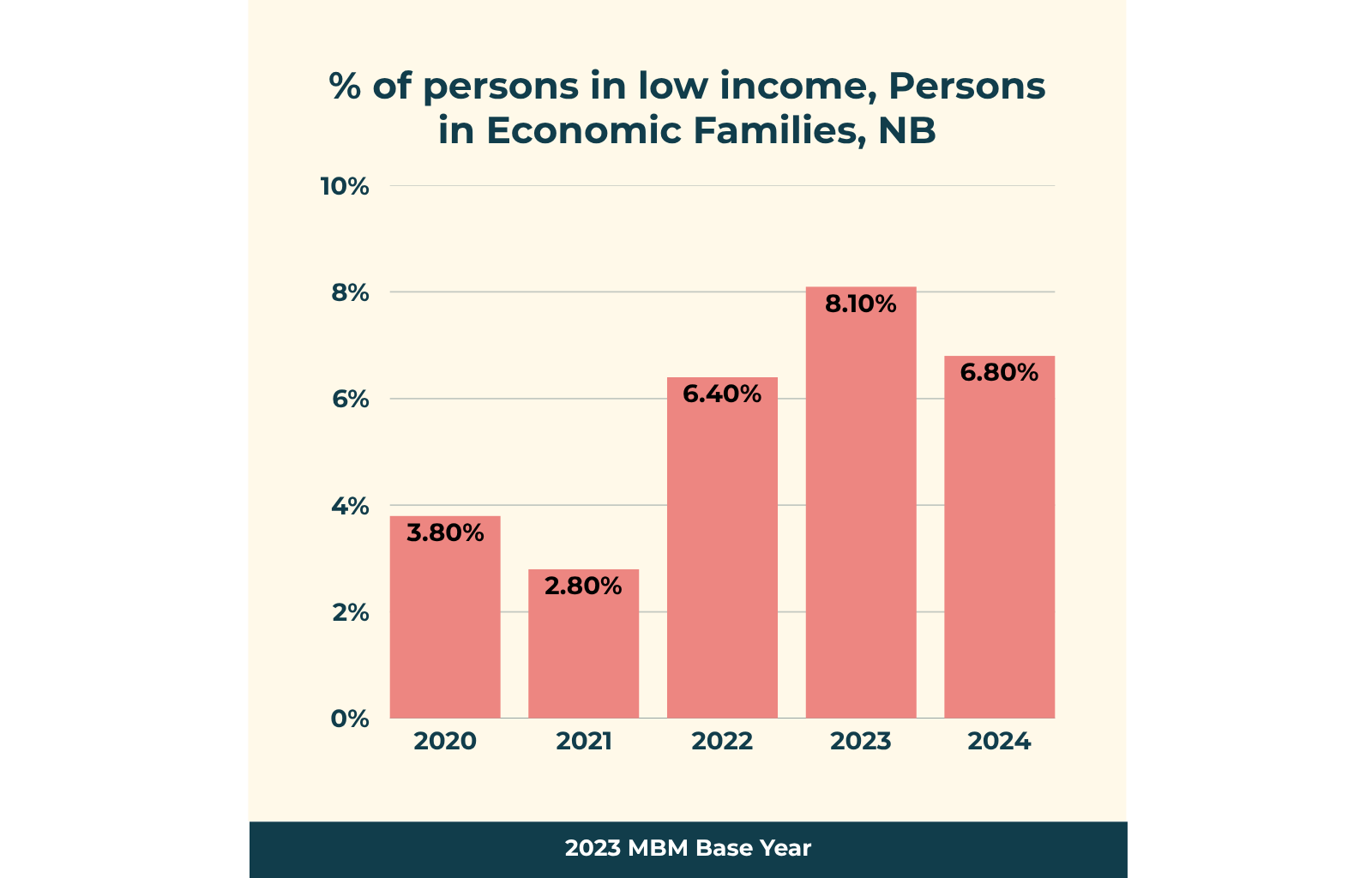
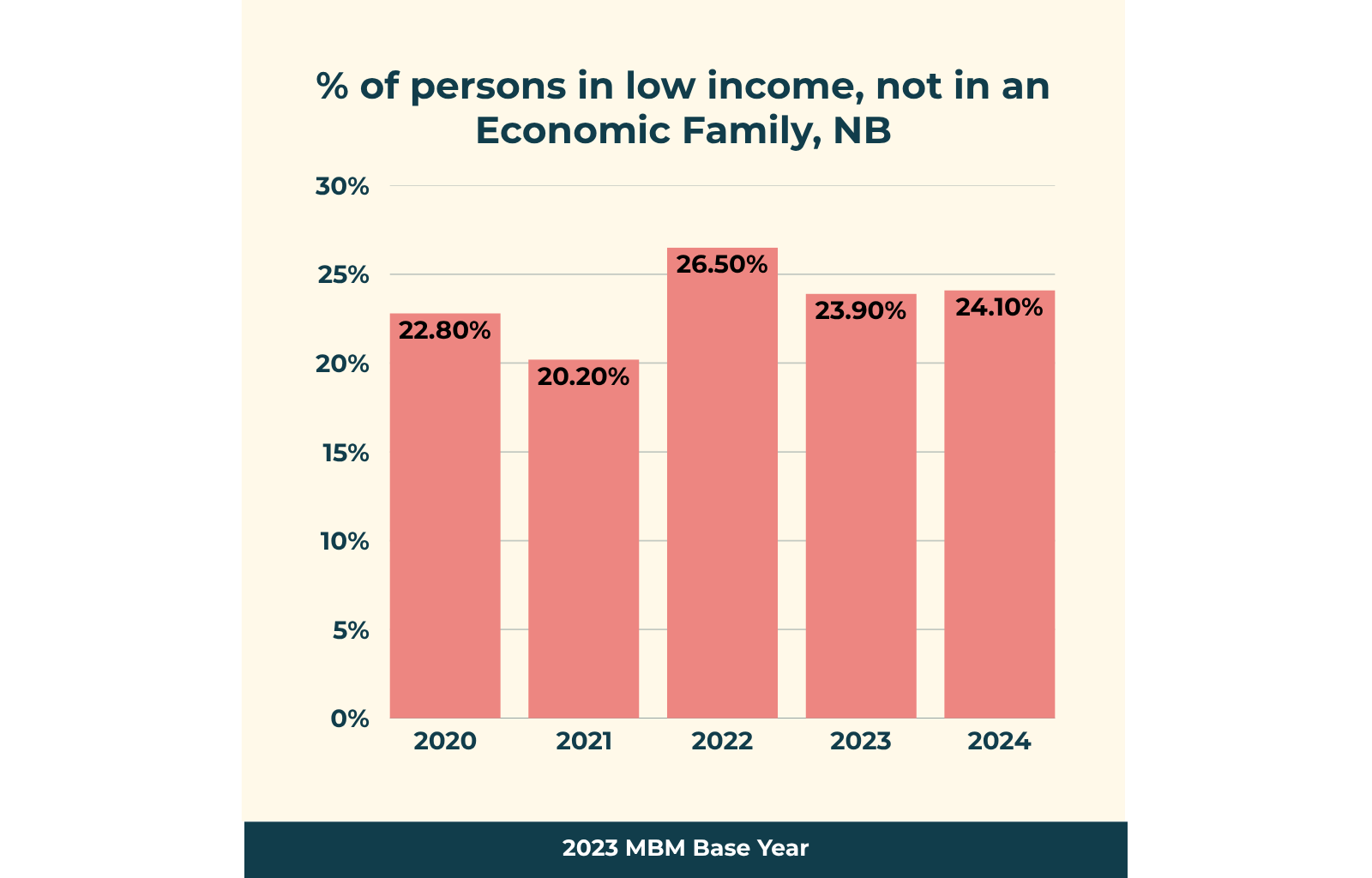
Poverty and Economic Families
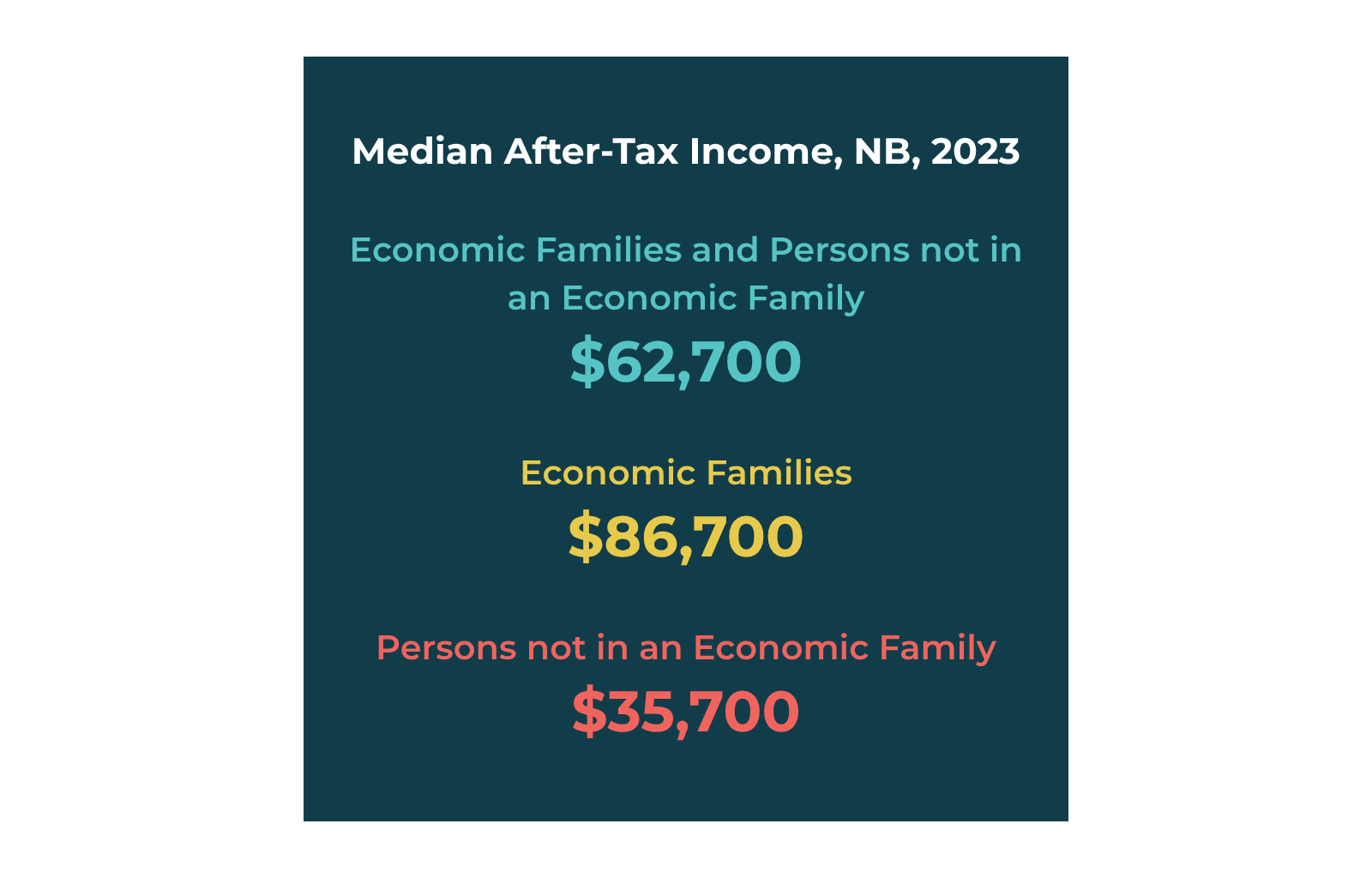
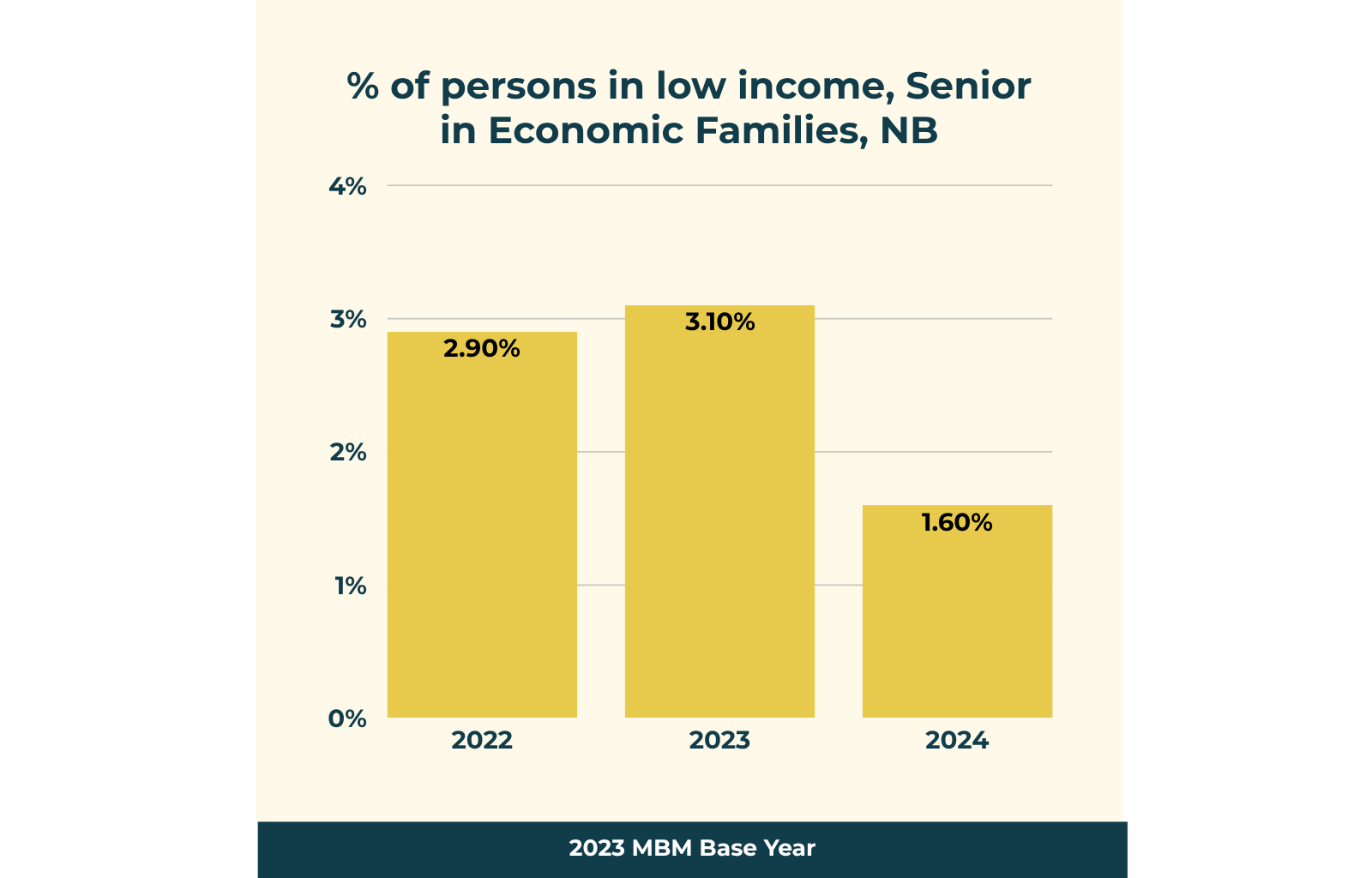
Poverty rates are often measured using economic families, which are groups of related people living together and sharing income and expenses. Because family members can support one another financially, economic families can help reduce the risk of poverty, meaning poverty rates may be higher for people who live alone or do not have access to family support.
More Info
Key Terms and Measurements
Global Objective
In alignment with Canada’s Poverty Reduction Strategy and the United Nations’ 2030 Agenda for Sustainable Development, the global objective of the OPT4 plan is to reduce income poverty by at least 50% by 2030.
ESIC will expand the reporting of the plan with evidence-based measurement and monitoring. We will continue to align with Canada’s baseline year of 2015 to calculate the poverty rate based on the nationally-adopted Market Basket Measure (MBM).
Market Basket Measure (MBM)
The MBM is based on the cost of a specific set of goods and services that represent a simple, basic standard of living. It includes things like food, clothing, transportation, housing, and other everyday needs for a typical family.
Low-Income Measure After Tax (LIM-AT)
A set percentage (50%) of the average household’s income, adjusted for family size. Larger households need more money, but not proportionally more, so the income is adjusted to reflect that.
Deep Poverty
In New Brunswick, deep poverty is measured using a number of key indicators, including the MBM and the LIM-AT. Deep poverty is living far below the poverty line, at 50% or less during a given year. While the MBM is used in New Brunswick to measure poverty, LIM-AT provides valuable information relative to depth of poverty.
Despite the decreases in the rate of poverty in several years of OPT, the depth of poverty (the gap between the low-income line and the average income of those in low income) and the number of people living in deep poverty has increased. Someone living in deep poverty in New Brunswick is more likely to be single, living alone, and middle-aged or receiving social assistance as their sole income. Having children or being over the age of 65 reduces the likelihood of experiencing deep poverty. ESIC will continue to monitor the prevalence of deep poverty and will include it in dashboards.
Economic Family
Means a group of two (2) or more people who live in the same house and are related by birth, marriage, living together as a couple, adoption, or foster care.
Reference Family
Consists of one male and one female adult aged 25-29, along with two children: a female child aged 9 and a male child aged 13. This family was chosen because it represents a modest, basic standard of living and is the most common family size in Canada.
Racialized Person/Family
This term comes from “visible minority”. A visible minority means someone who is clearly part of a racial group that is not white, according to the Employment Equity Act. The Act says visible minorities are people who are not Indigenous and who are either not white or not of European background.
Senior Family
Refers to a family where the highest-income earner is 65 years or older.
Non-Senior Family
Refers to a family where the highest-income earner is younger than 65 years.