Pillar III
Strengthening People-Focused Service Delivery Dashboard
People Connected to Benefits
Coming Soon
211NB
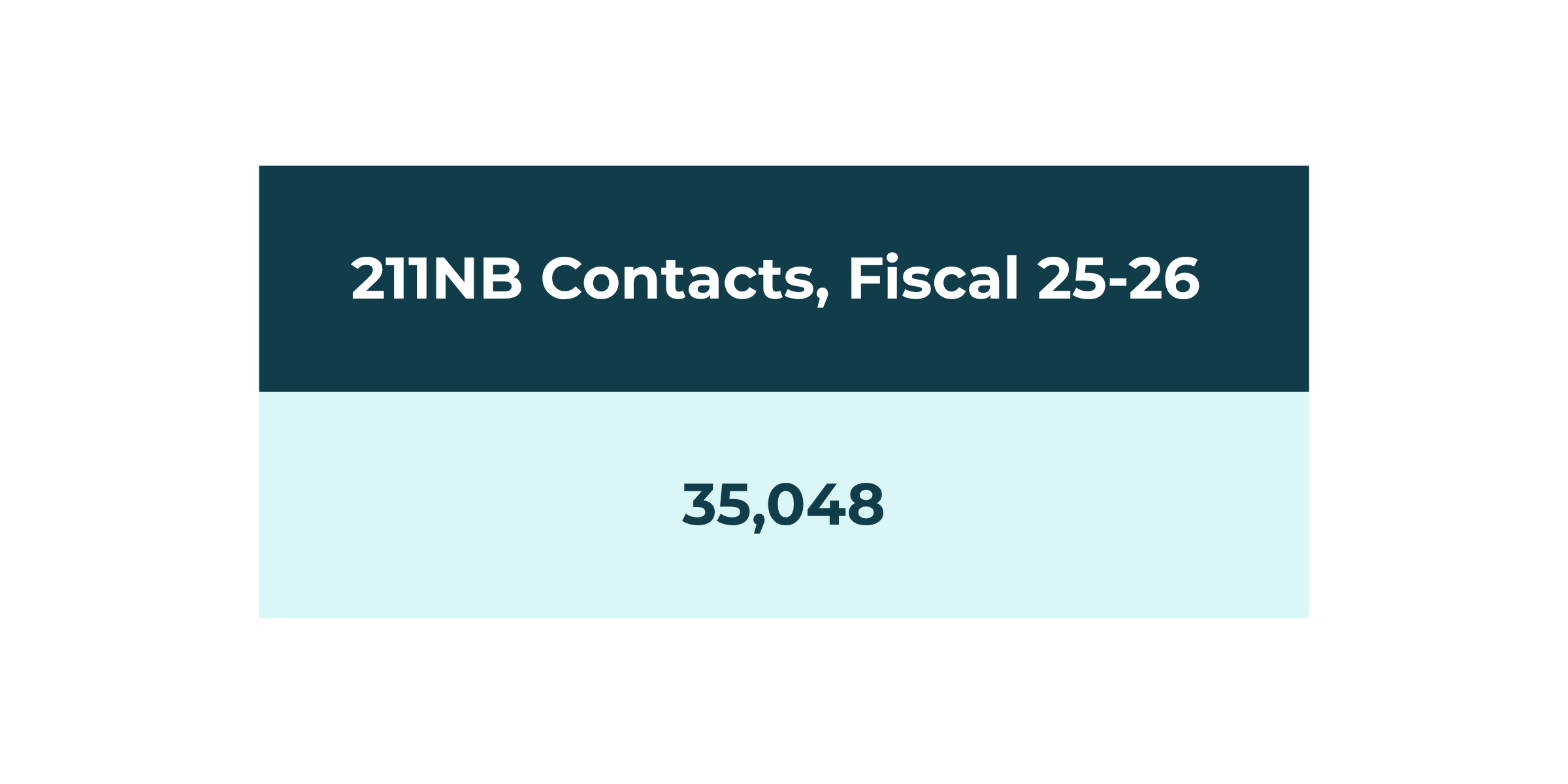
211NB, a free, confidential resource to help New Brunswickers navigate services, was launched in October 2020 by the provincial government in partnership with the federal government, United Way, and ESIC. 211NB is an information and referral service that connects New Brunswickers to critical human, social, community and government support. This service helps people navigate government and community programs and services quickly to find what they need for their unique situation. Phones are answered 24/7, 365 days a year, in both official languages and over 150 other languages through interpretation services.
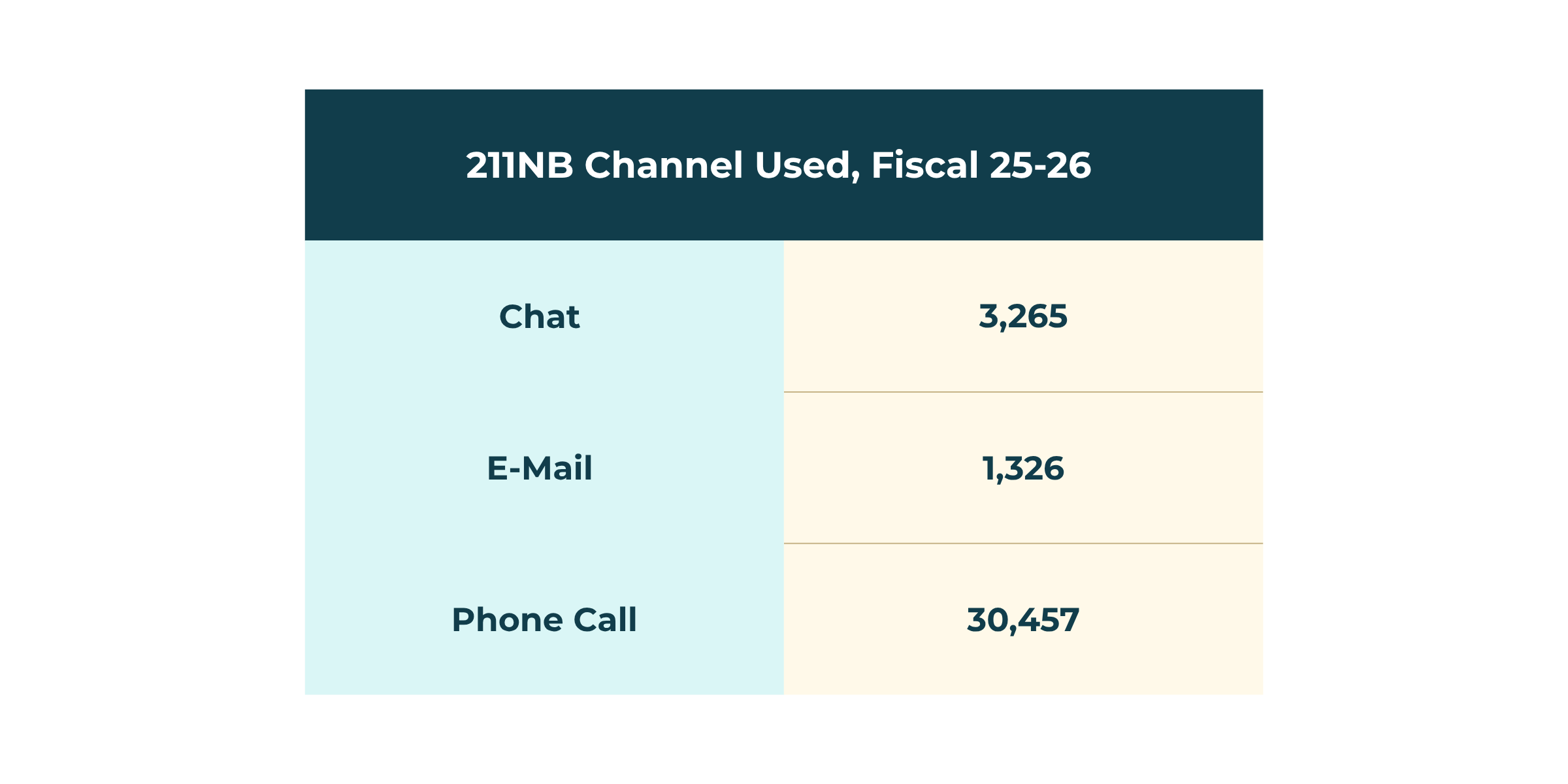
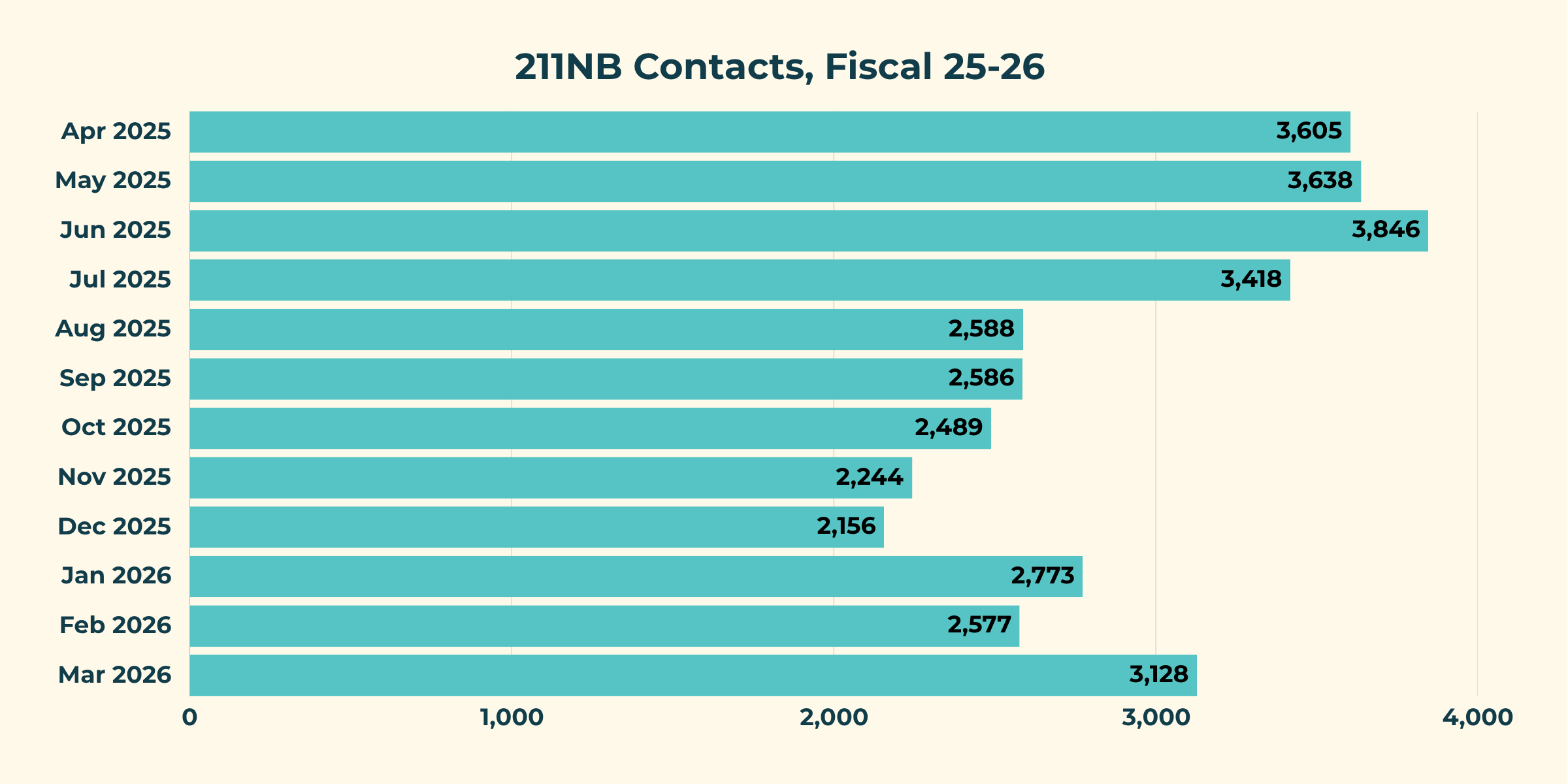
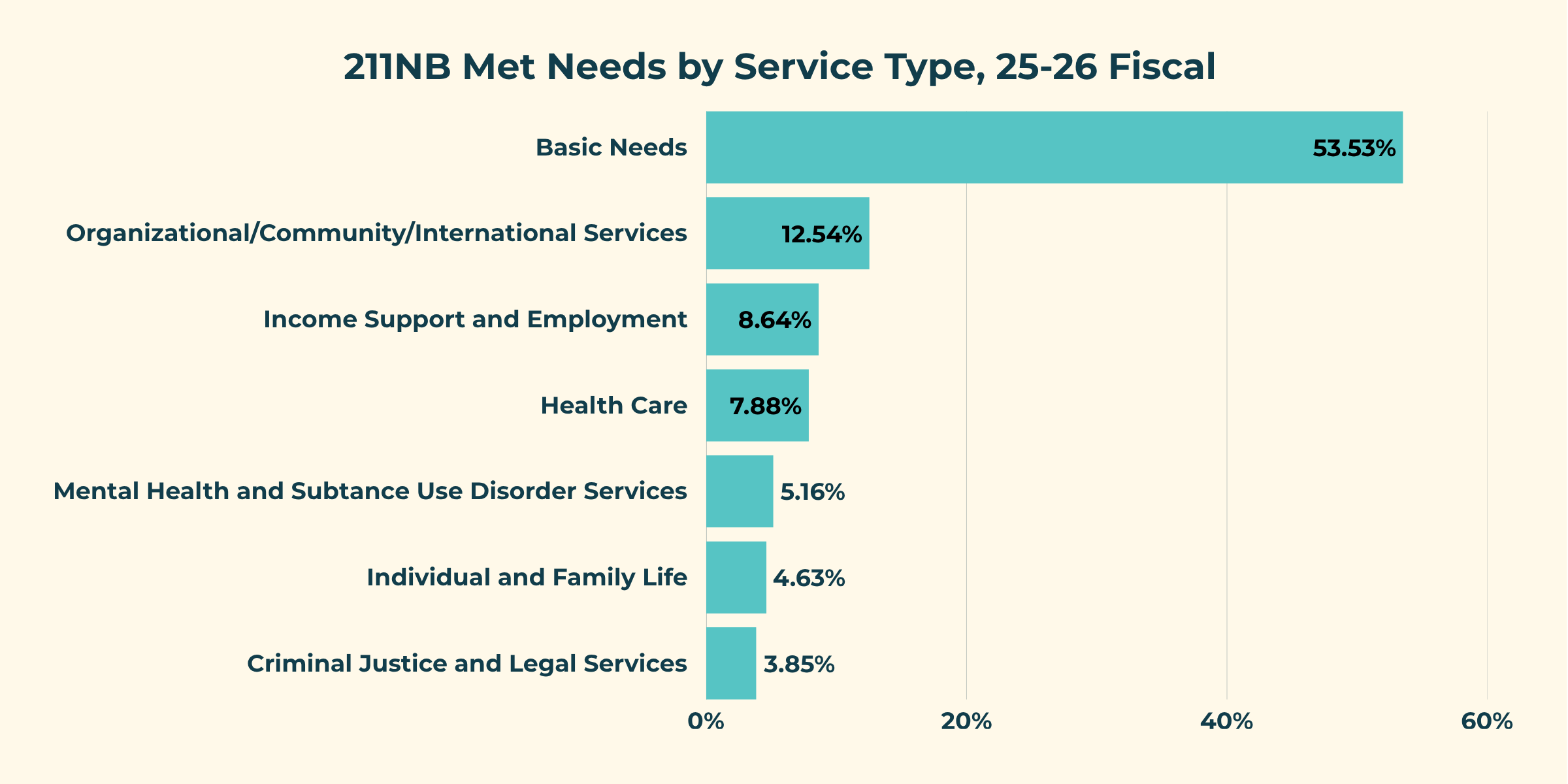
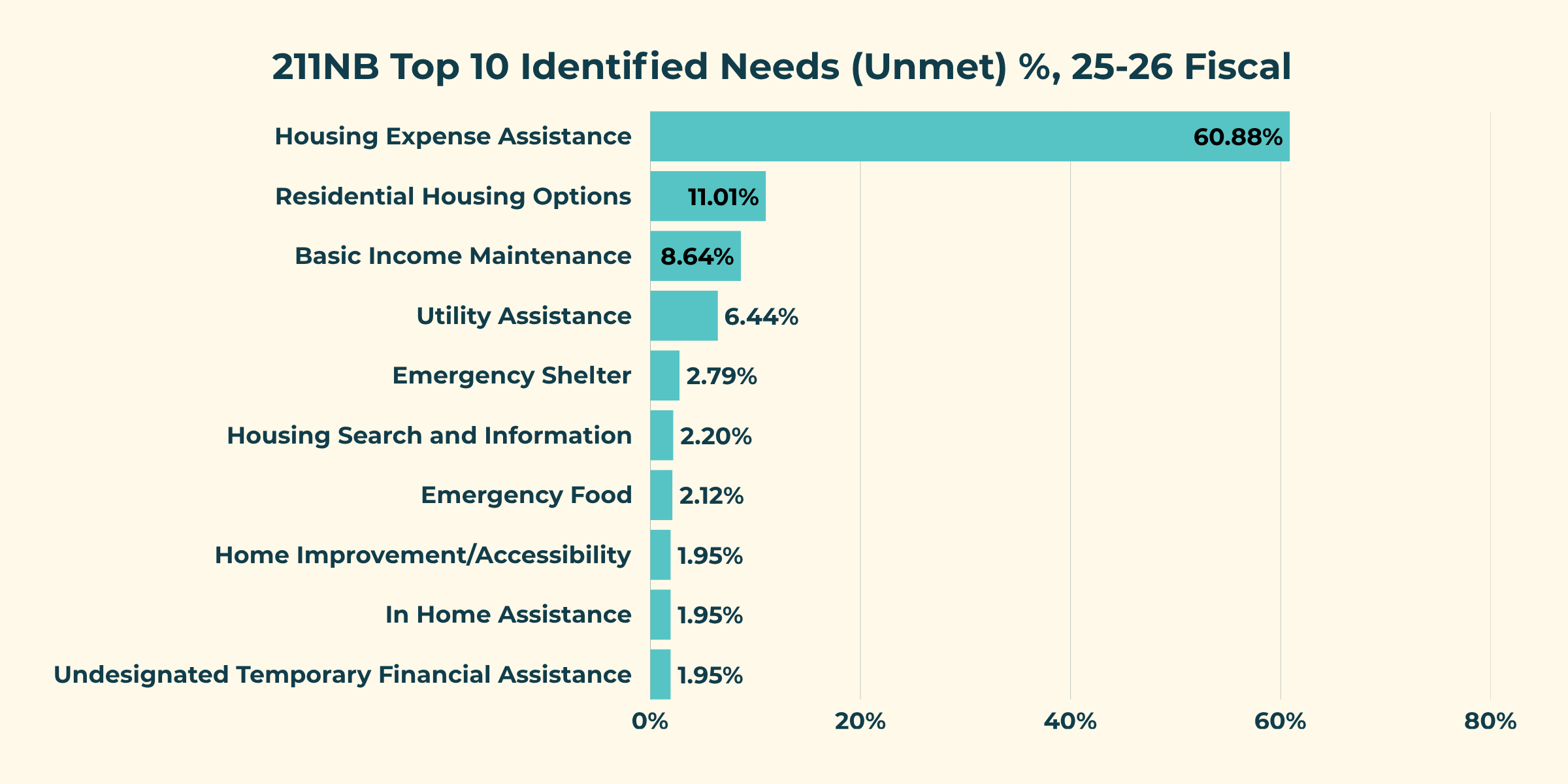
Met needs are the identified needs that the 211NB service was able to fulfill by finding an appropriate service or program.
In the 2025-2026 fiscal year, 211NB made 28277 referrals and there were 26296 unique needs
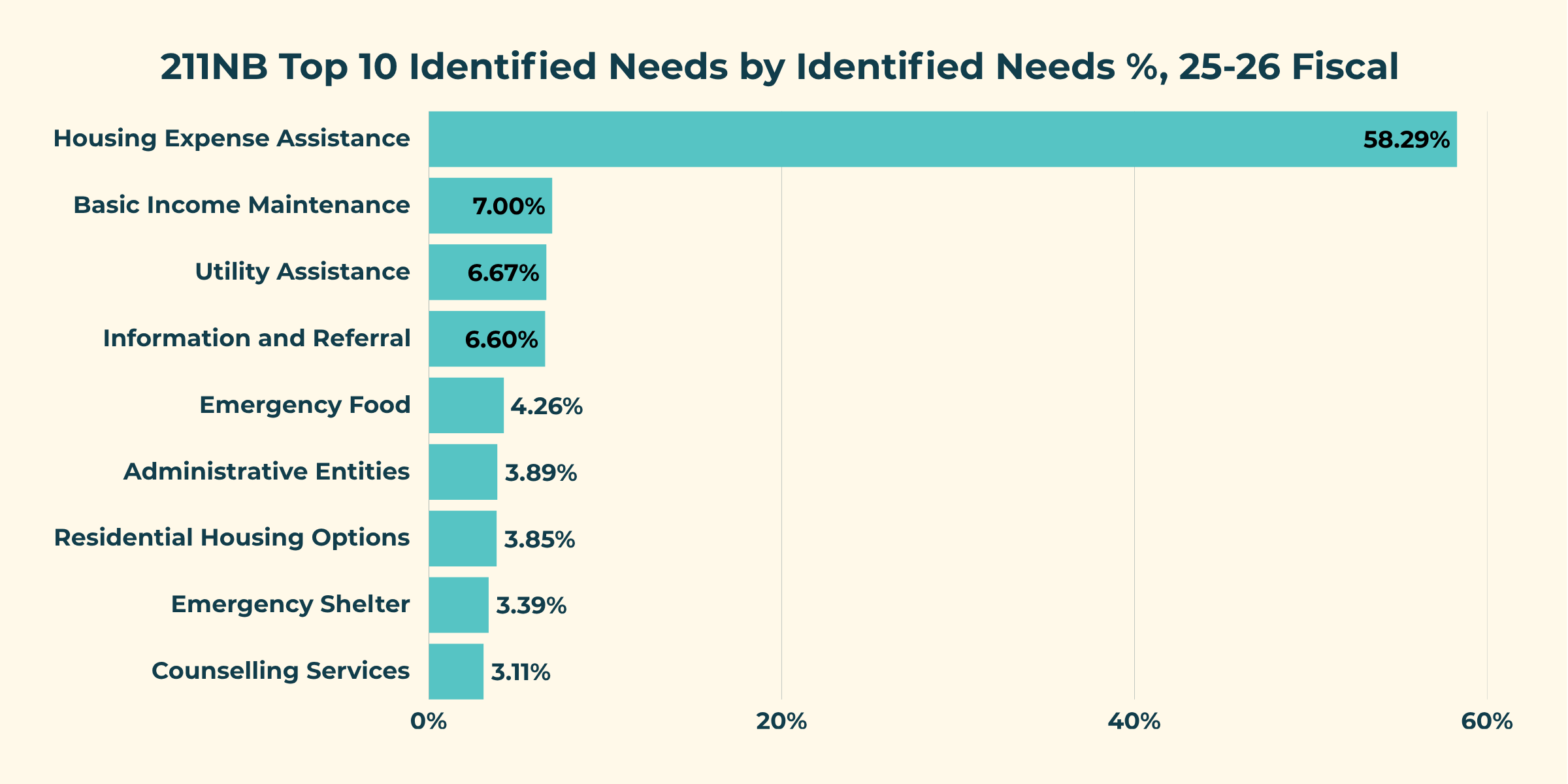
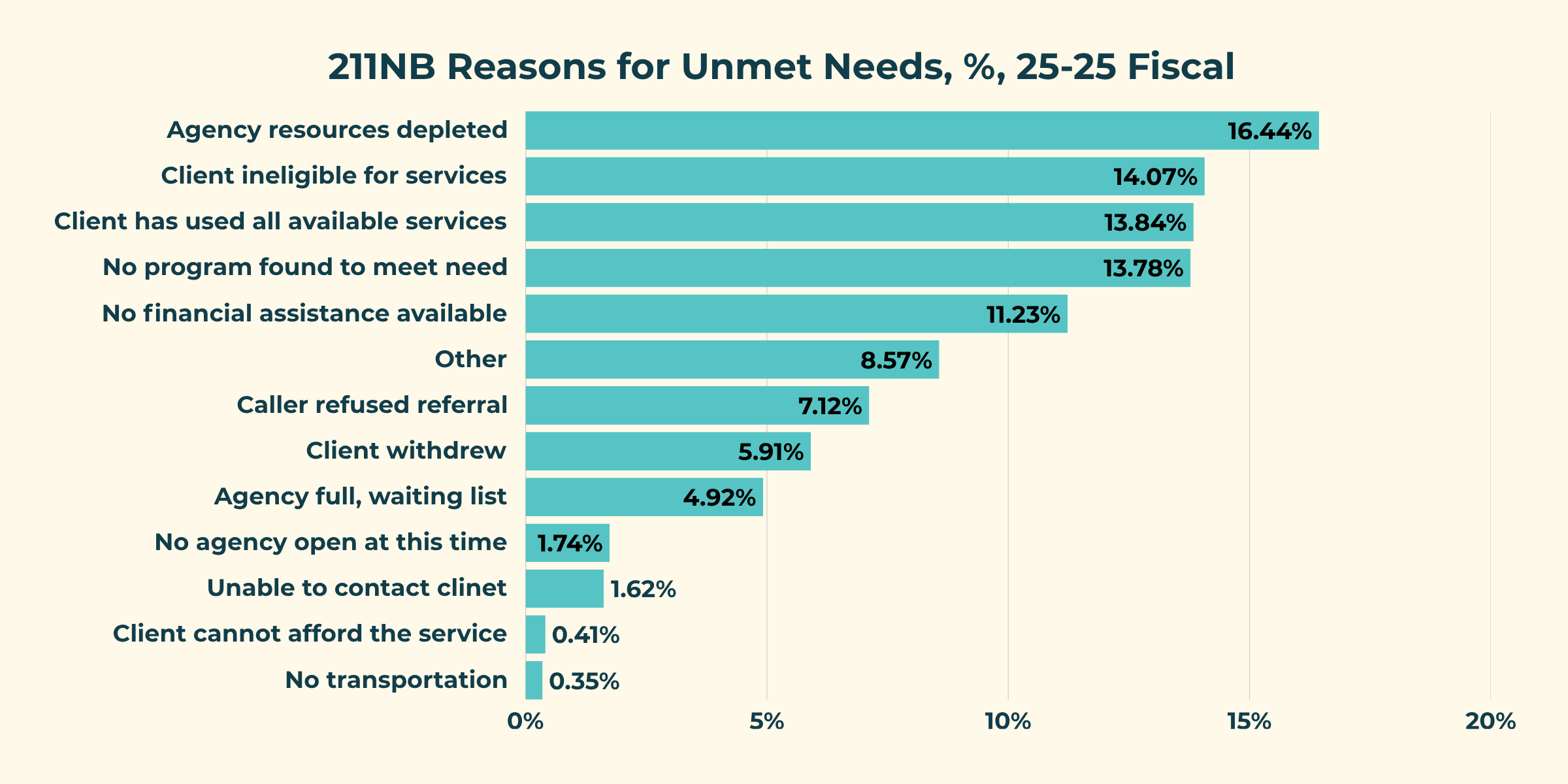
Unmet needs are the identified needs unable to be fulfilled by the 211NB service.
Identified needs are the needs expressed by the caller when they call 211NB. A single person can have more than one identified need.
Literacy, Numeracy, and Chronic Absenteeism
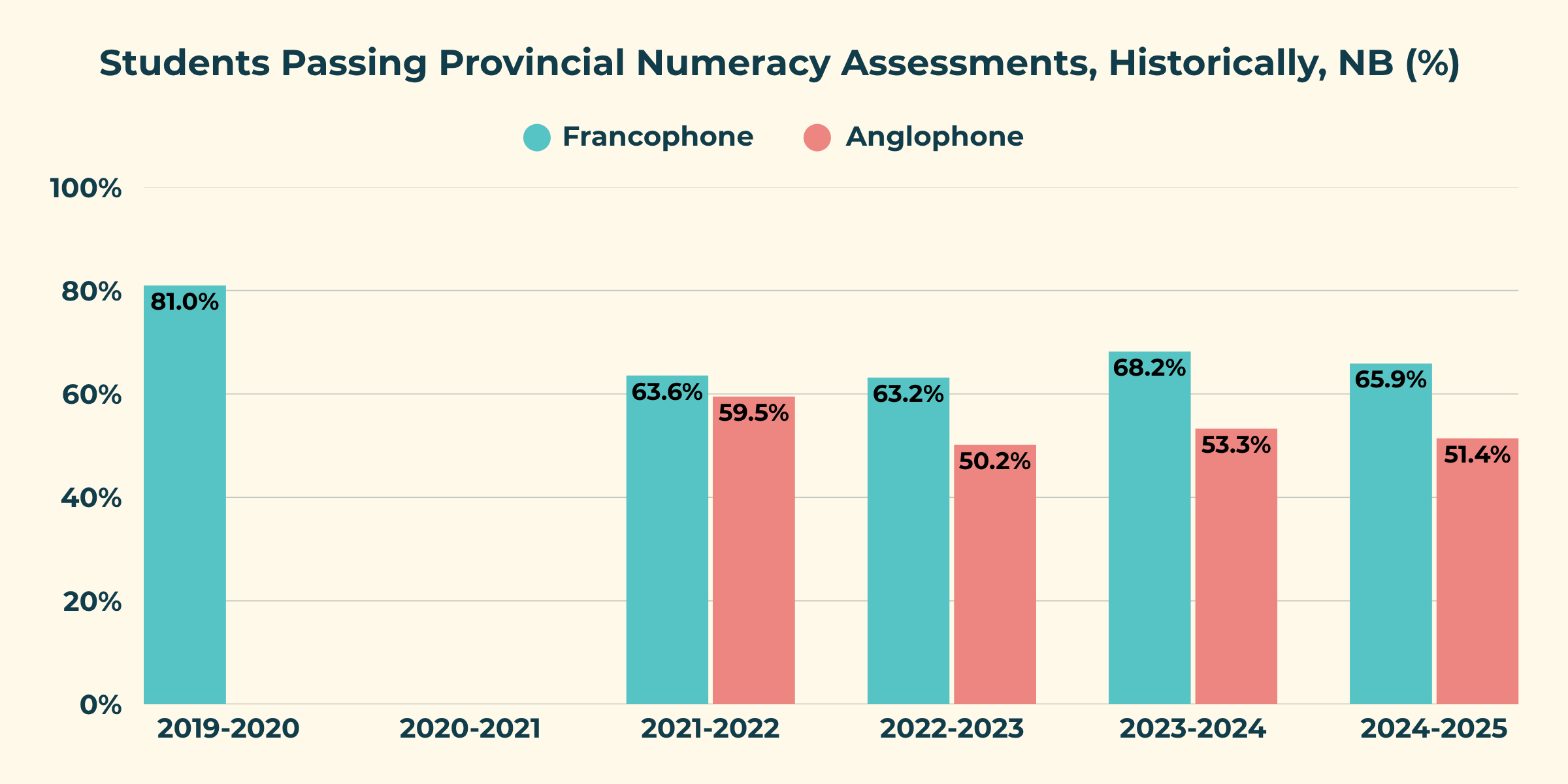
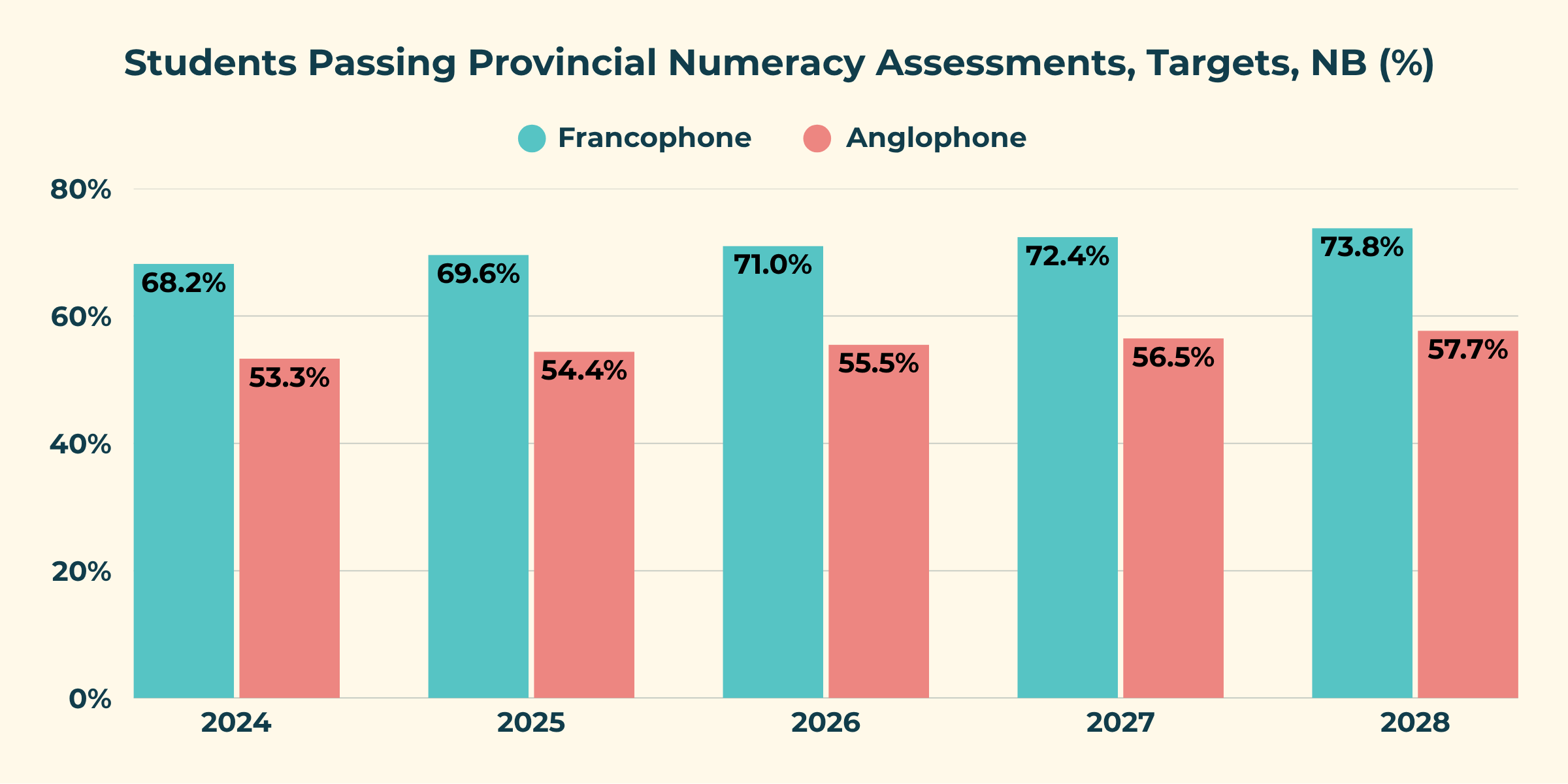
Literacy and numeracy were important issues during OPT’s public engagement process. Higher literacy and numeracy rates are important insulators against poverty. Monitoring progress and seeking opportunities to improve literacy and numeracy rates will be an important component of OPT. ESIC will seek to collaborate with partners to increase the tools available to support adult literacy and promote a multi-sectorial approach to supporting initiatives and projects that advance literacy and numeracy skills at all ages.
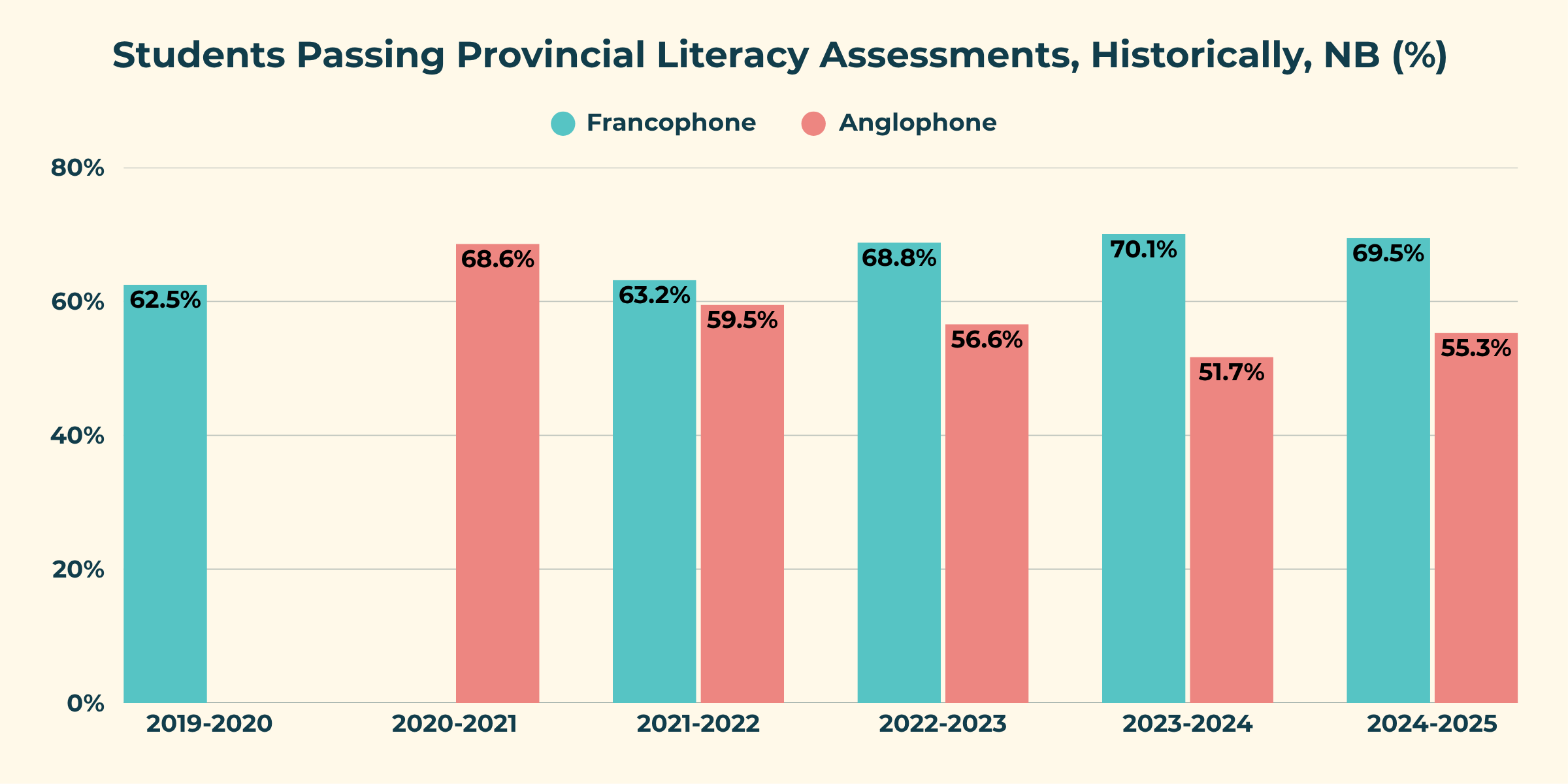
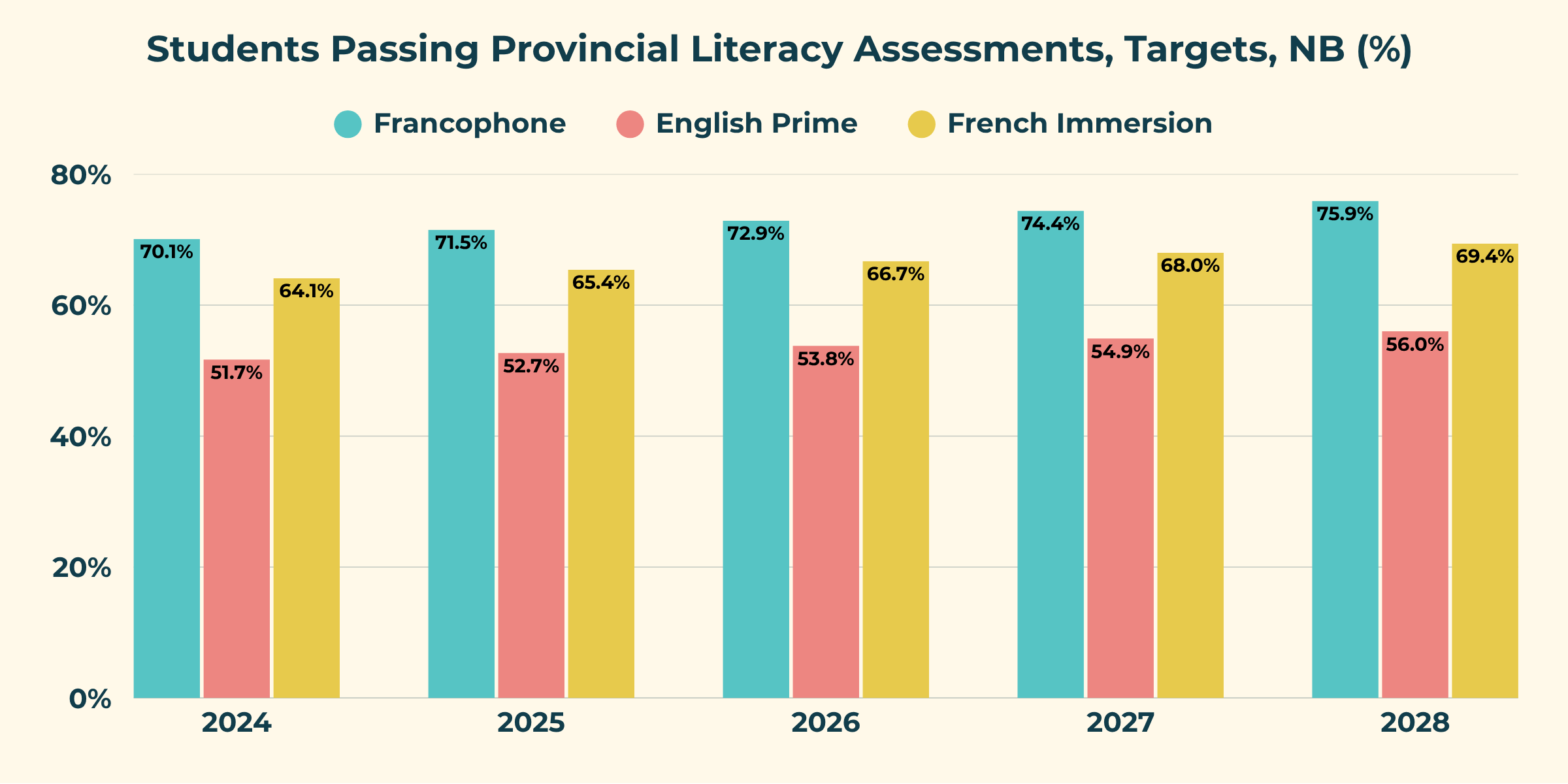
Literacy
Literacy is important, because it allows individuals to understand and communicate through reading and writing, which is vital for both academic success and daily life.
Chronic Absenteeism
Chronic absenteeism is harmful, because missing school regularly disrupts learning and makes it difficult for students to catch up. Consistent attendance is key to staying engaged in lessons, building skills, and achieving academic success.
Numeracy
Numeracy is crucial, because it helps individuals make sense of numbers and solve practical problems, both in school and beyond.
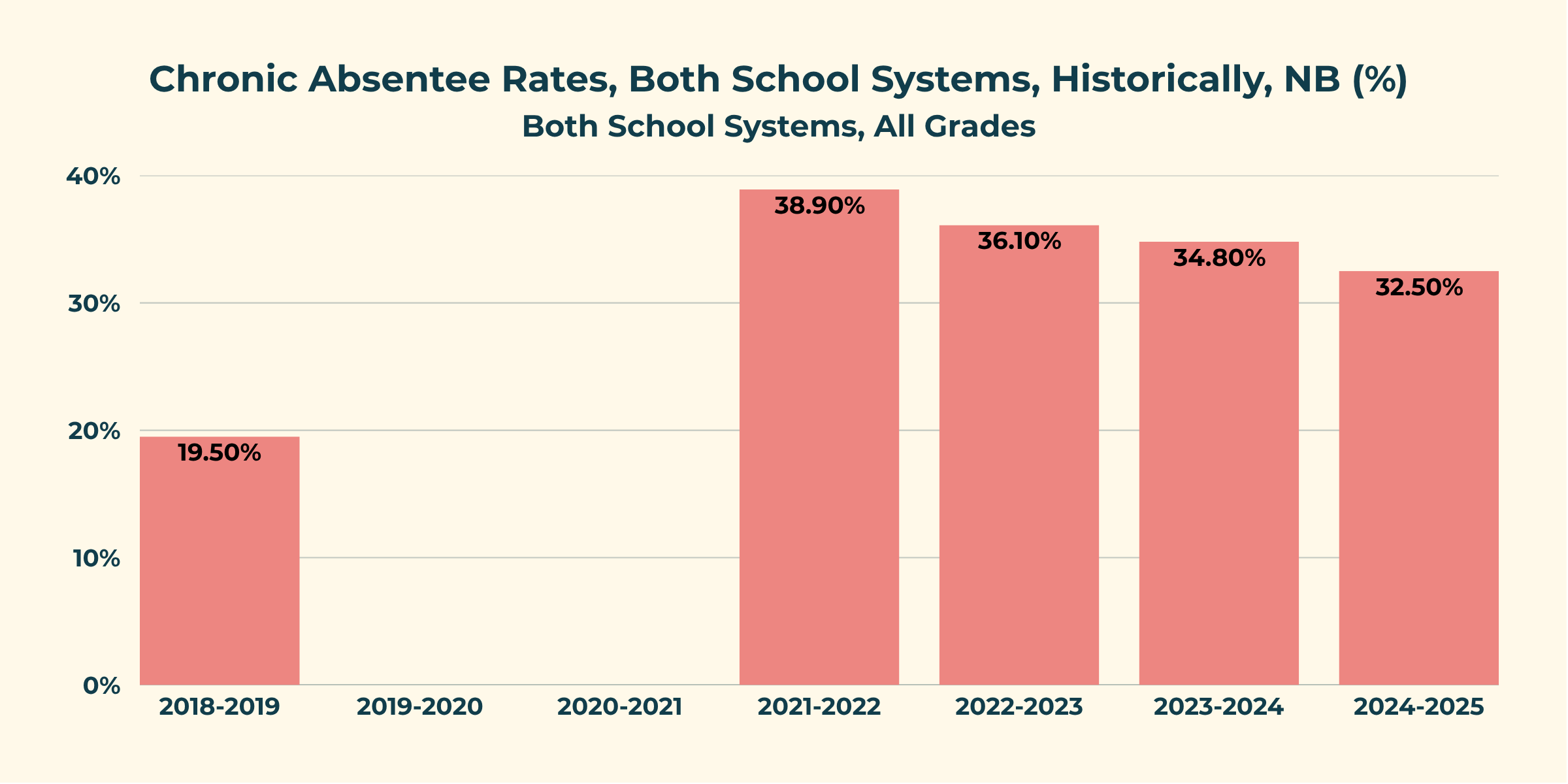
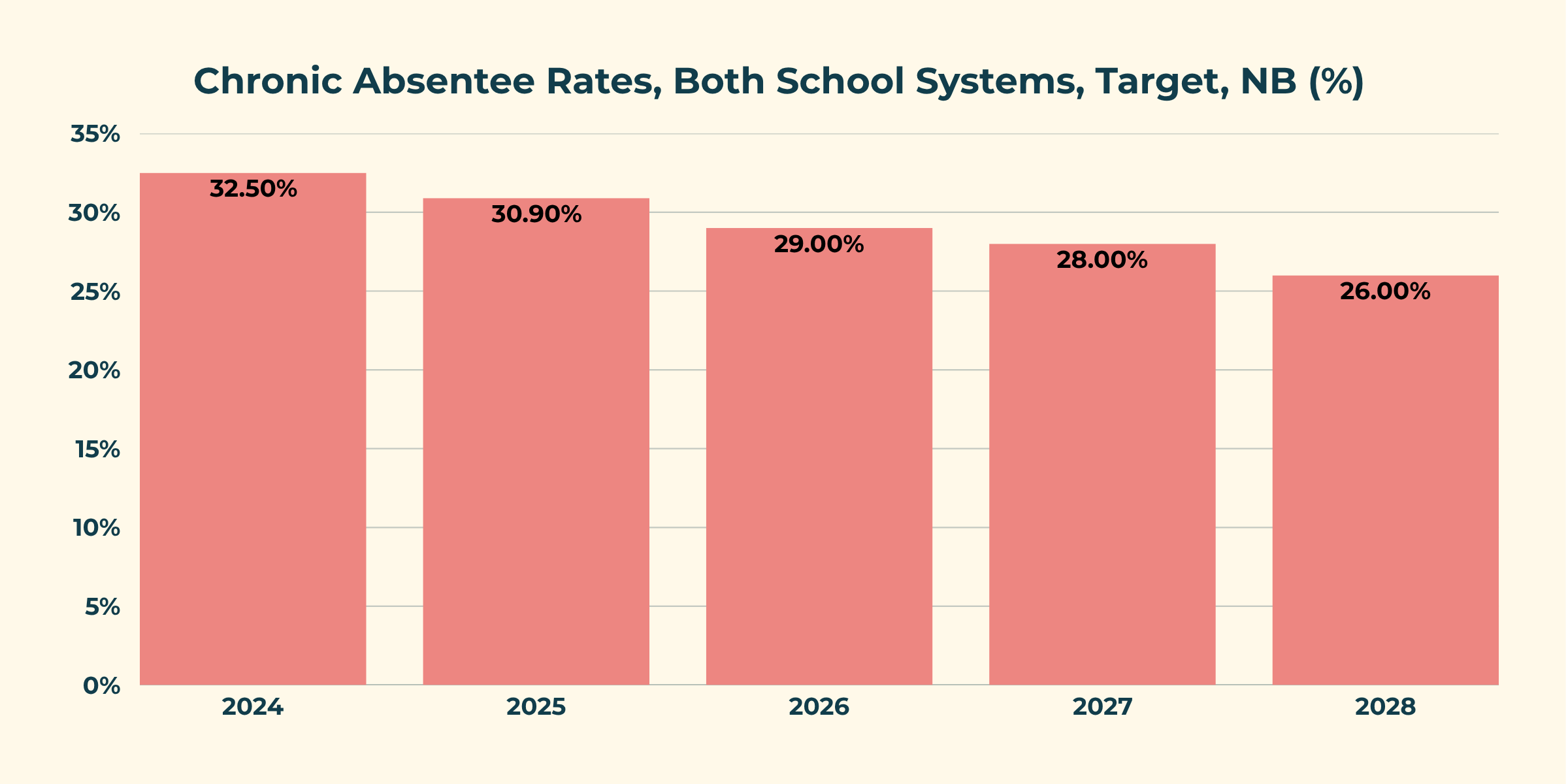
Chronic absenteeism occurs when a student misses more than 10% of instructional time in the school year (over 18 days a year). Rates of chronic absenteeism have climbed significantly since COVID-19.
Child and Youth in Care: Graduation Rates
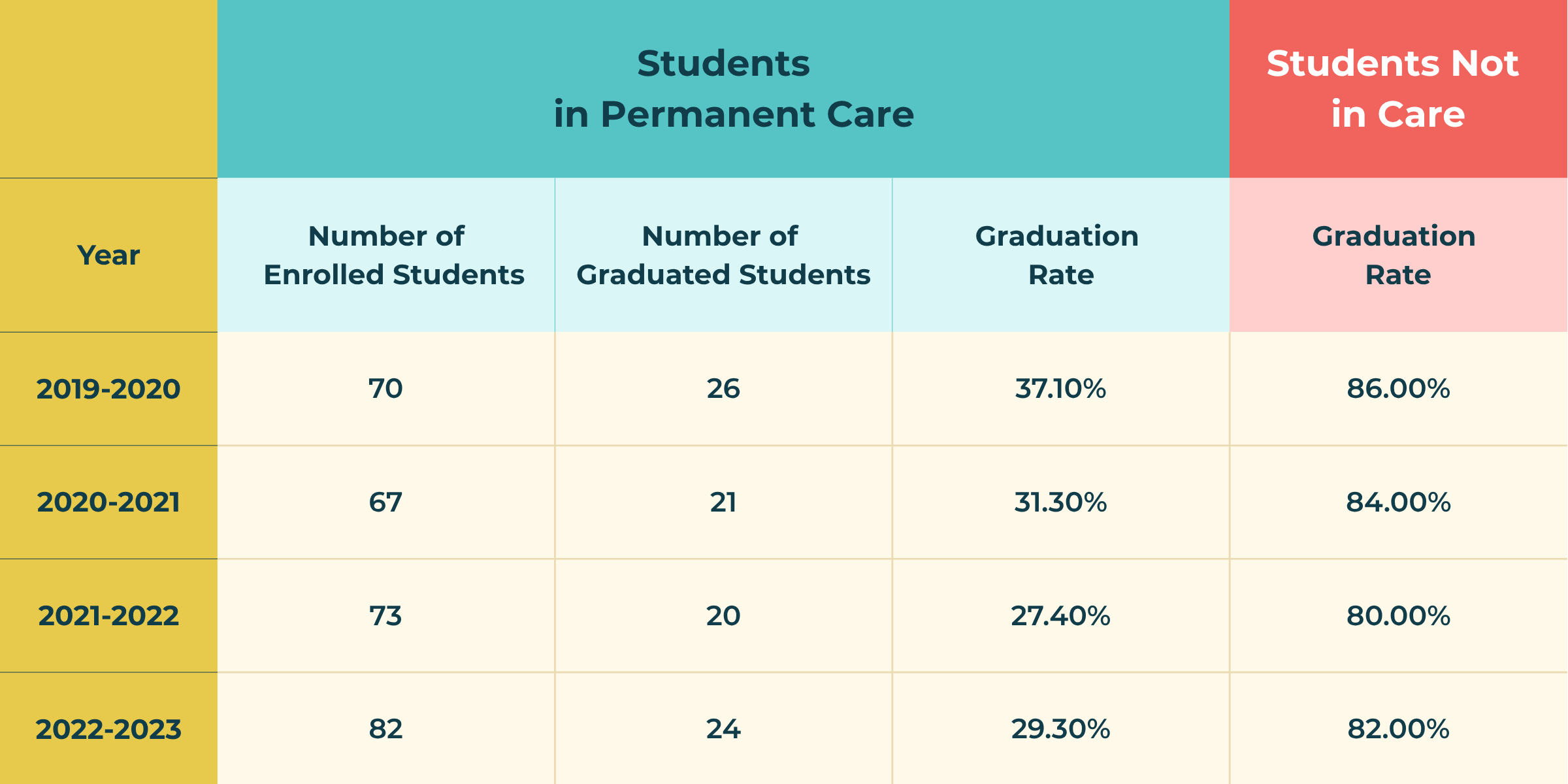
High school graduation is a key predictor of future economic security, employment, health, and social inclusion. Monitoring graduation rates among youth in care provides an important indicator of whether government interventions are helping vulnerable young people achieve better long-term outcomes and reducing their risk of poverty and social exclusion.
Sense of Belonging to a Community
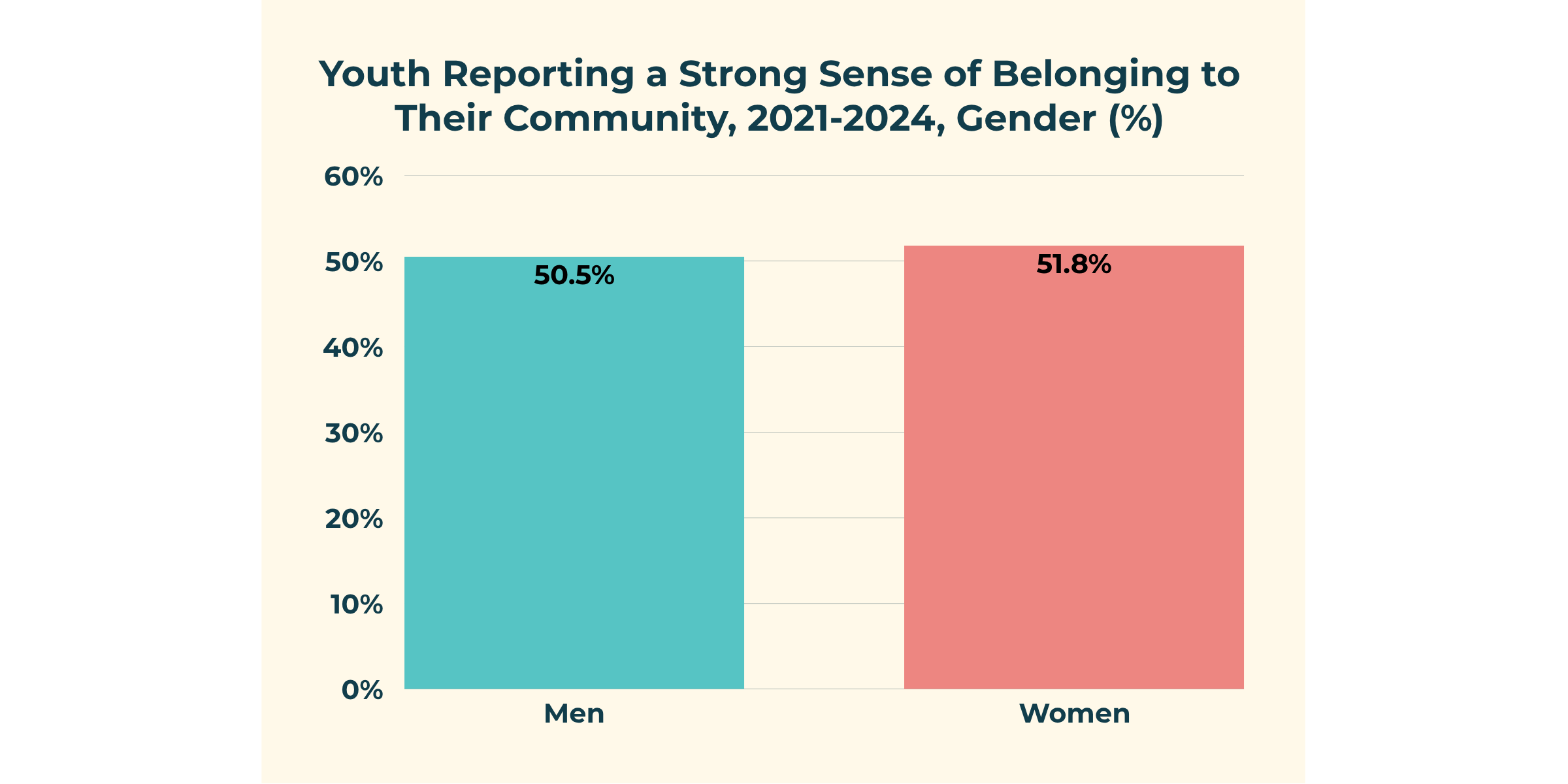
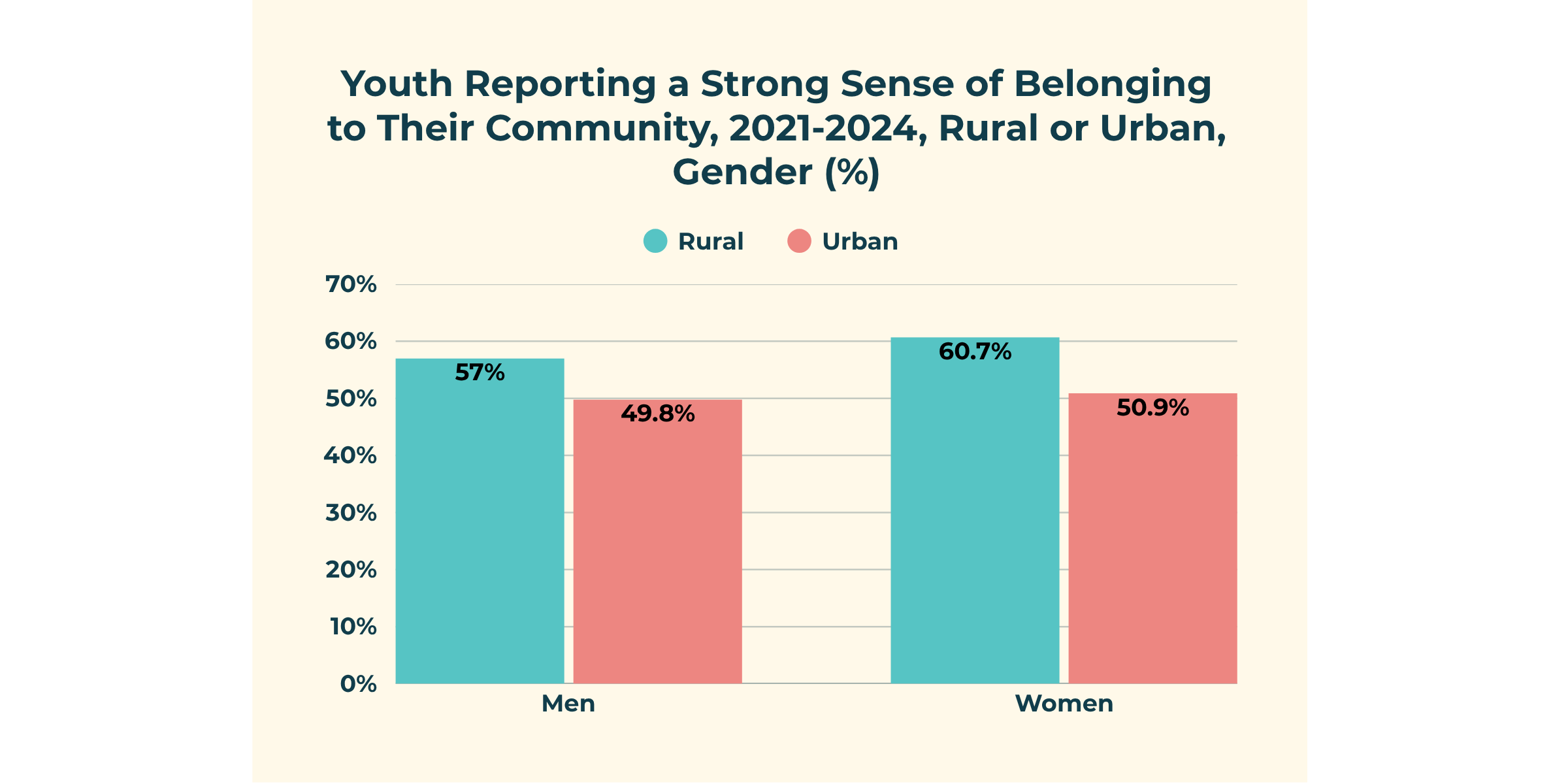
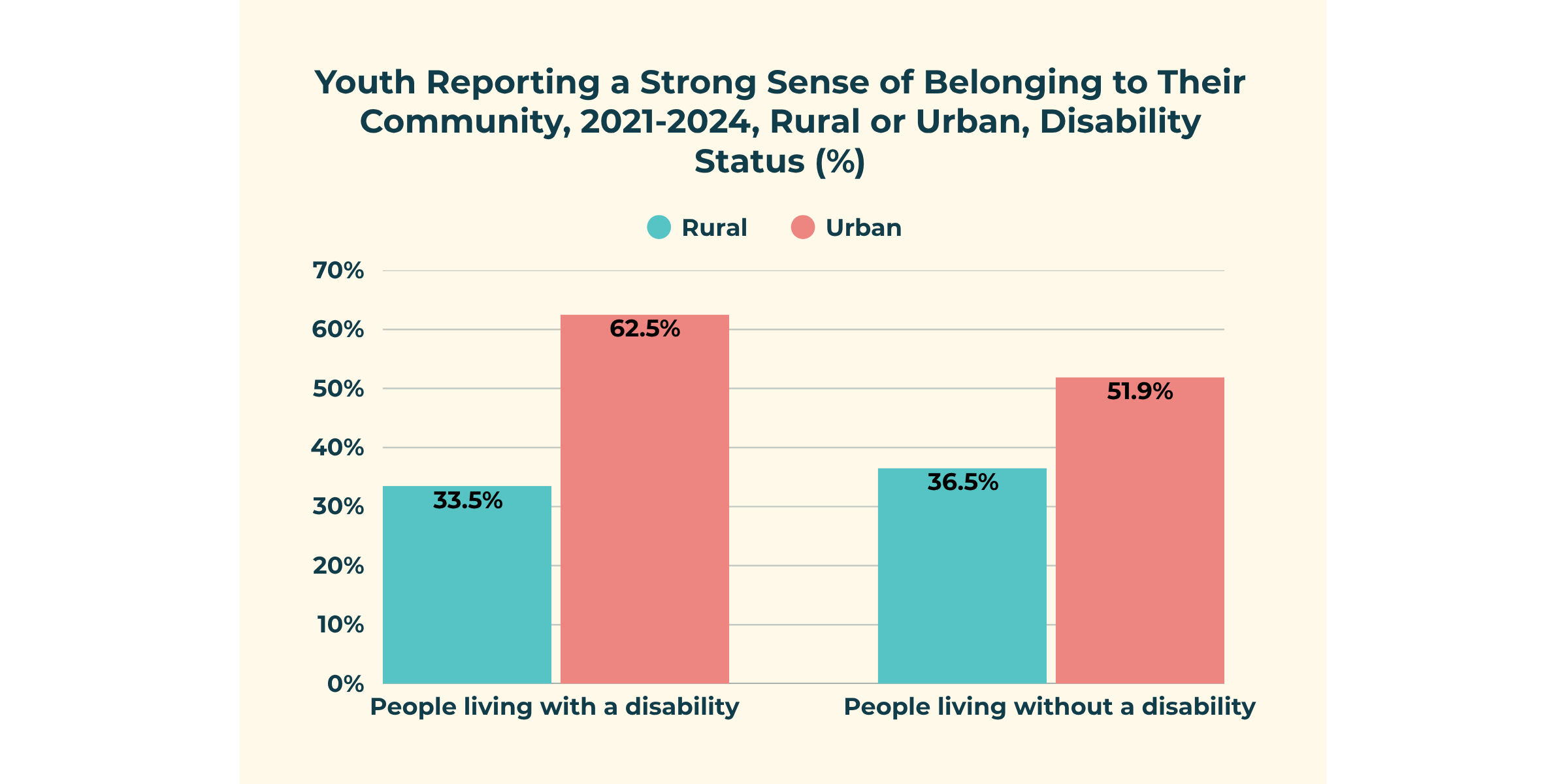
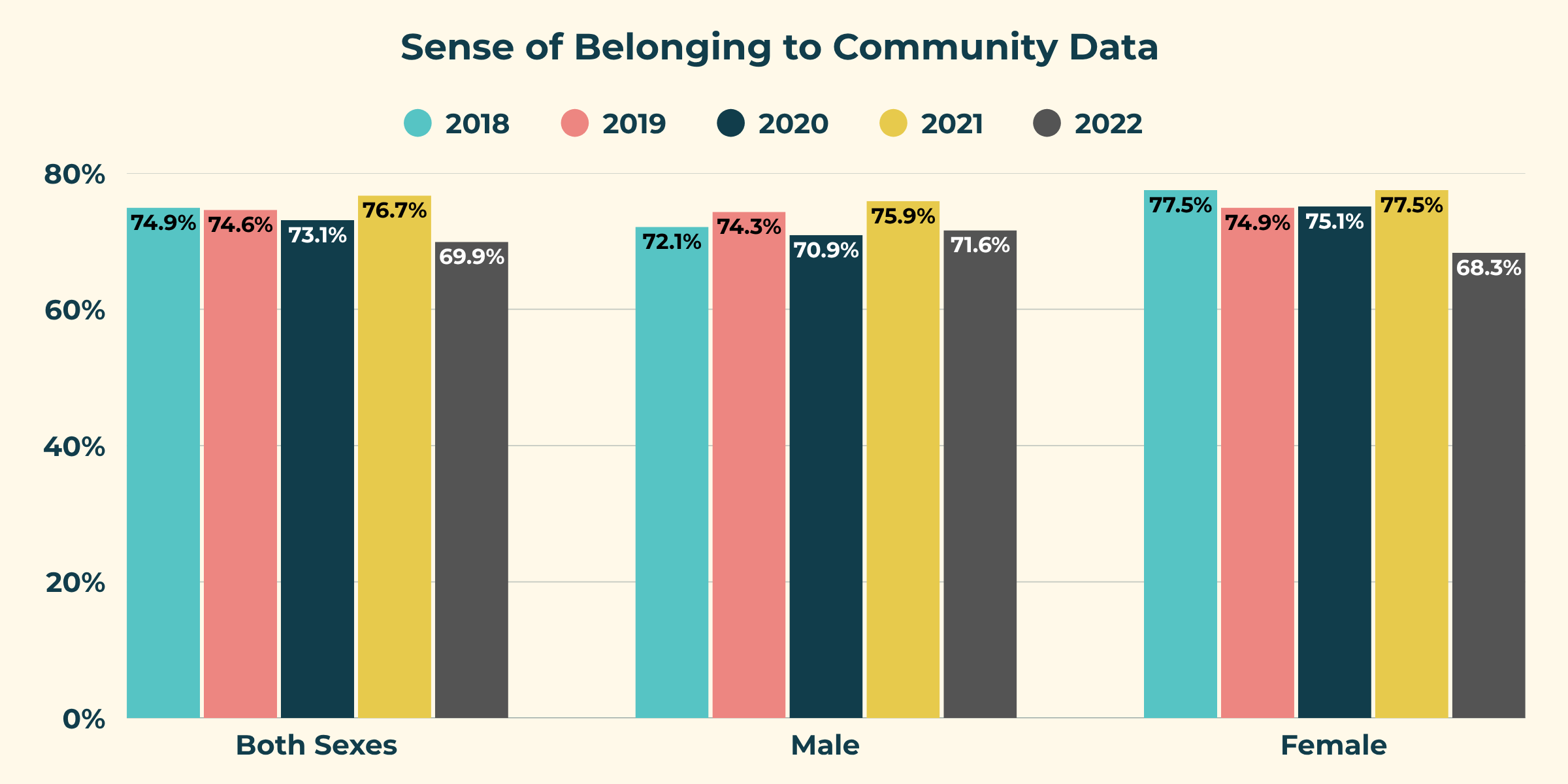
A sense of belonging to a local community is an important metric for wellbeing. Sustainable Development Goal 11, “Make cities and human settlements inclusive, safe, resilient, and sustainable”, includes a focus on what it means to have a sense of belonging to a community. A sense of belonging is critical to fostering collaboration between residents, governments, businesses, and non-profits. It contributes to the creation of more resilient communities that are less susceptible to racism and hatred and more focused on harmony and unity. A sense of belonging in deeply rooted in both individual and collective experiences. It is an important part of the social fabric of New Brunswick.
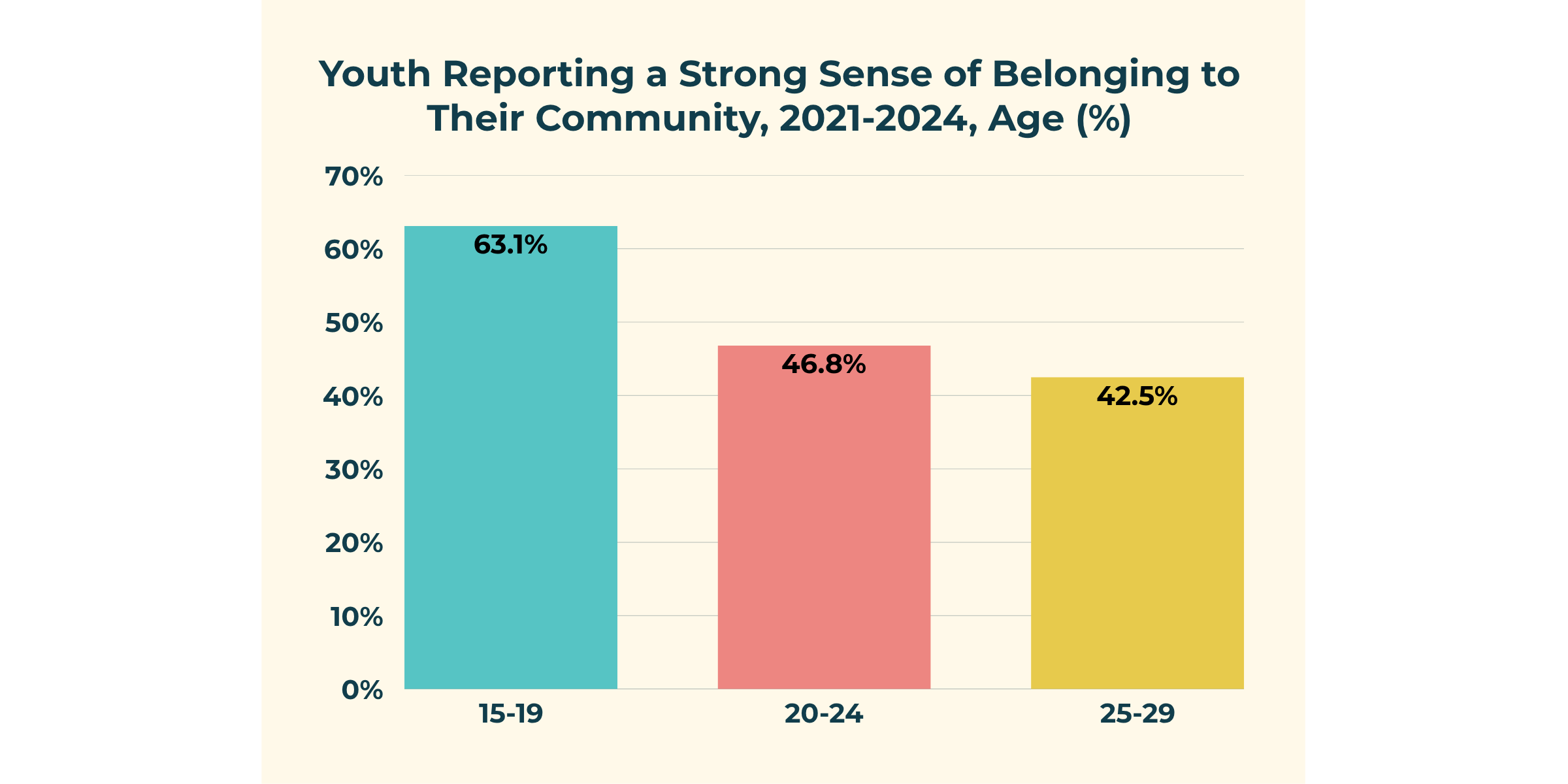
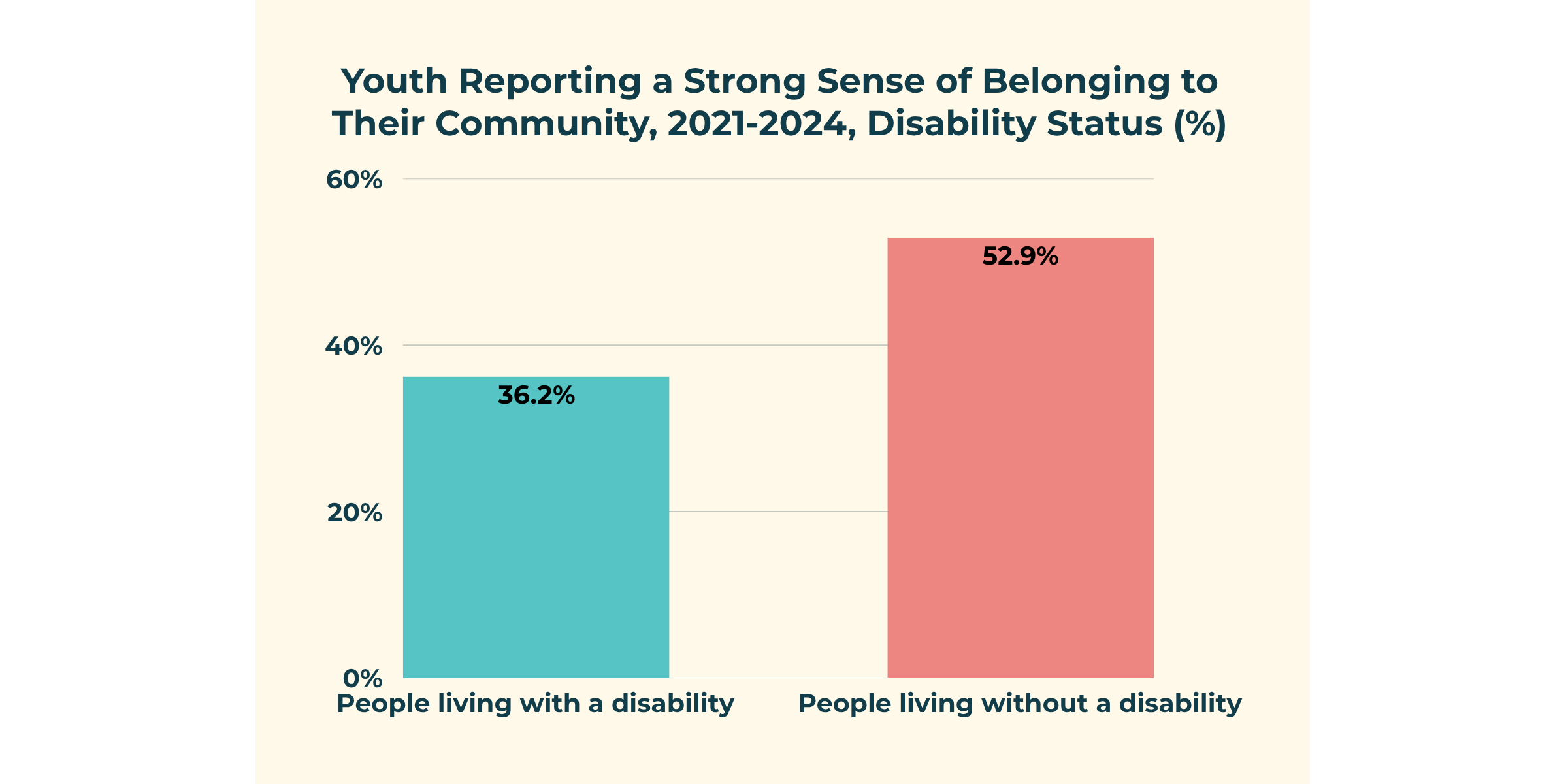
Atlantic Canada's sense of belonging in youth is on par with the rest of the country, at 51.9%.
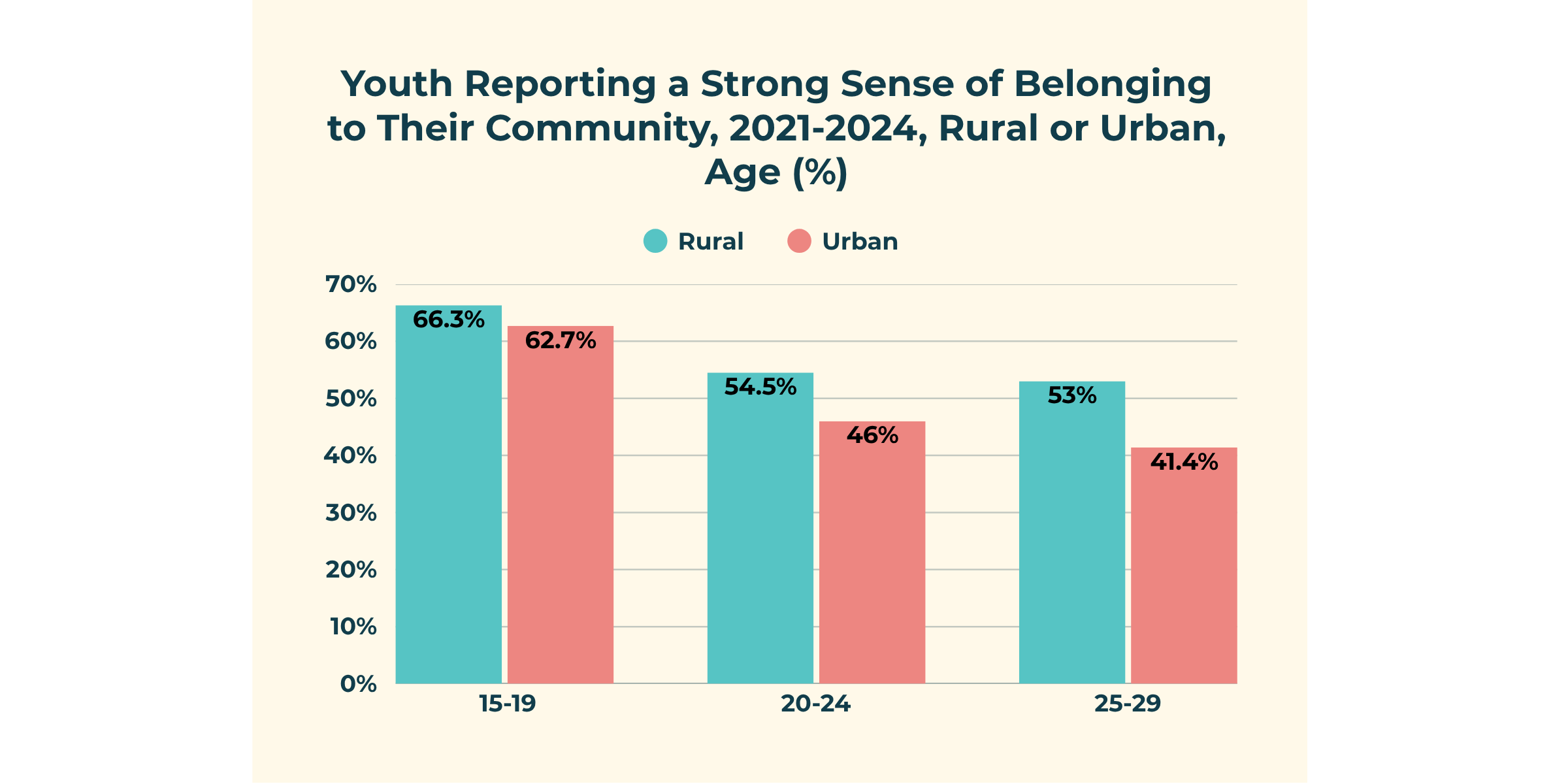
Quality of life indicators among youth are measured by correlations to positive physical health, positive mental health, not being lonely, always having somebody to count on, high life satisfaction, positive future outlook, satisfaction with friendships, and satisfaction with family relationships.
Belonging to your community is an insulator against poverty. Stronger connections often translate into better access to supports, education and employment, and greater opportunities for mentorships and collaboration. Similar to other Atlantic provinces, New Brunswick has a high sense of belonging. However, during the OPT4 public engagement process, there were clear indications that a sense of belonging is missing for many residents. This is an indicator that exists and will be monitored as an important display of progress towards social inclusion.